Are Universities Ready for the Next Big Crisis? | Grit in the Boardroom
Ask about Grit in the Boardroom
Episode Description
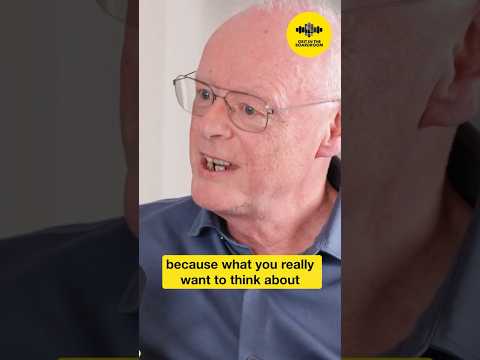
In this episode of Grit in the Boardroom, Erika Eliasson-Norris sits down with Professor Sally Wheeler OBE, Vice-Chancellor of Birkbeck, University of London, a distinguished academic and leading authority on corporate law and governance. Together, they pull back the curtain on the intense pressure cooker of higher education governance, exploring why board effectiveness requires managing deeply human stakes, not just ticking compliance boxes.
What You’ll Learn
· Why governance in higher education demands both challenge and trust.
· How university boards can manage financial risk, uncertainty and long-term sustainability.
· Why strong forecasting, risk appetite and board skills are critical to institutional survival.
· How leadership teams can create safe spaces for challenge without losing momentum.
· Why student wellbeing has become a central governance issue, not a side concern.
· What corporate boards can learn from universities about fixed tenure, rotation and renewal.
· How AI could change board administration, decision tracking and governance effectiveness.
About the Guest
Professor Sally Wheeler OBE is Vice-Chancellor of Birkbeck, University of London, a distinguished academic and leading authority on corporate law and governance. Sally has guided major institutions through periods of transformation and challenge, written extensively on company law and governance, and is known for bridging theory with practice.
Her leadership spans academia, law, and organisational governance, shaping how universities respond to financial pressures, regulatory complexity, cultural expectations, and questions of long-term sustainability. She brings a candid, grounded perspective on what governance really looks like inside universities.
About the host
Erika Eliasson-Norris is Chief Executive Officer (CEO) of Beyond Governance and Governance Assessor to the United Kingdom’s Post Office Horizon IT Inquiry.
Beyond Governance provides on-demand company secretarial support, governance advisory, and governance training to boards, Company Secretaries, and General Counsel. Beyond Governance help organisations strengthen governance, manage risk, and support critical projects without the need for permanent hires. Learn more here: https://beyondgovernance.com
Read the full transcriptHide the full transcript
- Bewildering, exhilarating, terrifying, but it had to be doable. There There was no alternative. I've been in board
- situations [music] where there has really been very little challenge, and that is monumentally unhelpful.
- Something awful happening to a student on what is effectively my watch keeps me awake.
- >> Welcome to Grit in the Boardroom. I'm Erica Ilias and Norris, and today I'm joined by Professor Sally Wheeler, Vice
- Chancellor of Birkbeck University of London. Welcome to Grit in the Boardroom, Sally.
- >> Thank you. >> Let's get into it. Sally, you've led universities through extraordinary
- challenges. When you think about governance in higher education, what's the moment that captures [music] its
- reality for you? >> I think my first ever Board of Governors meeting at Birkbeck.
- As Vice Chancellor, I'd been there before, but I I went back after a period of 20 years, and we were talking about
- whether we were in the terms [music] set by the Office for Students a going concern or not.
- Uh and that really did crystallize my thinking, because although you get the information before you start job, you
- never get, as you said uh in your intro, you never get quite the information you
- need that makes you realize how against the wall you are. >> What was that like stepping in on the
- kind of first meeting? What did What did it feel like to be stepping in and then
- to hear the information kind of land and then kind of think, "Okay, well, what do
- I What do I do now?" >> Bewildering, >> Mhm. >> exhilarating, but also a terrifying, but but it had to
- be doable. There There was no alternative but for it to be doable. >> You obviously had a strong belief in in
- the power of kind of turning that around and the university itself. >> University staff don't like it when you
- refer to what they do, what they teach on as products. >> Yeah. >> But they are, essentially. And taking
- Birkbeck as a whole, I was convinced that its product was saleable that and that I could drive up student
- numbers and drive up other activities to bridge the gap. I wouldn't think that about all HE institutions,
- but I think there was enough uniqueness there, there is enough new uniqueness there to be able to turn it around.
- >> And you're in a better situation now than you were back then? >> Yes, uh better as in there is a plan,
- there's a plan I think that will turn it around. All of these things come down to
- time. Do you have sufficient time to be able to execute that plan? In many worlds, you would just throw
- resources at that plan and you'd be able to execute it more quickly, but of course, when you're up against it, you
- can't. I think also HE institutions are much less command and control than corporations would be.
- So, you can't just turn around and go, "Oh, by the way, we're doing X from tomorrow." and just filter that down.
- You have to be able to socialize that message, you have to be able to take people with you.
- >> What stood out to you in how the leadership team handled that uncertainty? >> So, that's another thing that inspired
- me to take it on. I think I inherited a very good leadership team. Uh I've lost a couple of people through
- natural attrition since then, retirements, etc., but I've been able to replace them and
- one of the important things for me is that they slot into the team, but they bring something different in
- terms of how they think. Uh and I also know myself well enough to know that I need people who say will say
- to me without fear or favor, "You can't do that. That's a crazy idea." or "That won't work. Why don't we look at it like
- this?" >> So, the leadership team is a safe space for people to challenge power essentially.
- >> Well, I would like to think it is. It certainly feels like that. I hope they would say the same. We're about to go
- into a period of doing a 360 analysis just to find out how we all fit together. But
- yes, I have been challenged by people and that's really good. >> I think it's really important. I mean,
- you know from kind of corporate law and corporate governance that you you teach that it's such a vital part of
- leadership to be able to come with you on the journey. It sounds like that's something that you instill within the
- team. >> Part of that journey is for them being able to push back. >> Yeah. >> And just to say,
- have you really thought that through? Are we Is this really the way for Is this really the thing to do?
- >> And do you feel that that experience in any way shaped your way of thinking about governance in
- organizations, particularly higher education? >> I I've never been afraid to challenge. I
- look back on my younger self. I think sometimes I should have reined it in. Um I think sometimes
- people must have thought she's a pain. >> But it's got you where you are today, right?
- >> Yes and no. I think luck luck plays an enormous amount getting where you are.
- Often there are choices, you make the right choice, things roll out for you. You make the wrong choice, they come to
- a juddering standstill. >> What would you say you would have done differently then if you kind of spoke a
- bit about um maybe reining it in a bit? How would you have done that? What advice would you give to others that
- maybe feel like that? >> Uh keep emotion out of it. Always be considered. And remember that people always remember
- the worst bits about you. >> Wow, okay. You've had me thinking about that now. That's interesting.
- >> It's true, I think. If you're terribly emotional about things, uh if you're really really sharp and
- confrontational about things, people might remember the confrontation, but they don't remember the substance of it,
- and you've lost so you've lost them. >> You've described graduation previously as a symbol of hope. What does that How
- do you know that? >> Ah. What does that moment represent for leaders? >> I think
- for both executive and non-executive leaders of a university, graduation week, we have 2 weeks in the year, is
- the best time ever. Students are delighted to have finished. Everything now is in front of them.
- Everything that they have worked for for the last however many years is in front
- of them. It's a massively exciting time. The families and friends who supported them are all there, and it's just time
- for huge congratulations to them. It's the best week. >> And what do you think that that brings
- to the leadership team and those that work in academia? >> I think it brings a feeling of a job
- well done. That's That's the job you're there to do, and for those people you have
- delivered. It is everyone's nightmare, something terrible happening to a student when you
- should have intervened and didn't. Um yeah, I had a student last year who we were desperately trying to persuade
- to go home to India. They were an overstayer. Um we had them in a hotel. We offered to
- pay the flight. They wouldn't go home. The authorities Have you ever tried to report anyone for overstaying? Don't
- bother. Um but they're not interested. Uh it was a really difficult situation. There was nothing for her in the UK. She
- was going to end up in some awful hostel or living on the streets. We had to get
- her away. I tried everything from getting a section, thinking that I the mental health people might give me a bit
- more help. Uh it was very very difficult. >> Hm, that sounds like >> And that takes a toll on staff.
- >> Yeah. >> Cuz they're desperate to get it right, and the system just won't let them get
- it right. >> So, is that what keeps you awake at night? >> Yes, something terrible happening to a
- student where perhaps we've intervened and maybe that wasn't the right thing to do, or we haven't been able to intervene
- and we should have intervened. So, something awful happening to a student on what is effectively my watch
- keeps me awake at night. I mean, there are other things that keep me awake at night, but but that is certainly core.
- >> Yeah. And how does governance in higher education differ from corporate governance in uh perhaps a corporate?
- And why do you think you talk quite a bit about um risk management sitting at the center of the survival of
- universities? How do they kind of all fit together? >> My impression of corporations is that
- certainly the large ones, the ones that are on a turnover scale with universities, are a little bit more
- command and control. Universities certainly aren't command and control. They're they're quite flat hierarchies.
- You often have people in really quite senior leadership positions just for a period of time and then they rotate back
- to the ranks. So, you don't see that in corporations, so continuity is difficult.
- Encouraging other people to both see the risks and explain the risks knowing that they will be back where
- everyone sitting in front of them is now in a couple of years' time can be quite
- hard. Leadership positions it for that reason in universities are not necessarily that attractive.
- So, it that it is difficult to get people to take them on. >> What would you say to someone thinking
- about it? What what's the benefit in doing it? Why have you done it? >> Well, I like a challenge. I think it's
- quite exciting. I I like being able to do the deals in inverted commas. Uh someone joked about
- me the other day, although I don't think they were joking really. They said, "Also, Alice has to do the same thing
- for the last 10 minutes. We better find us something else to do in a minute. So, I like the buzz
- of it. I think you can make a difference to the lives of students. You can make a
- difference to the lives of people in the institutions if you if you step up and do it.
- >> Yeah, and what do you think the impact is of someone in that sort of a leadership role? What what can they hope
- to bring? >> They can they can set the culture. Is the school, the department, the faculty
- you run is that a supportive place for people developing careers? Is it a supportive
- place for getting the best outcomes for for students? Are you planning for the future? Now, planning for the future in
- universities in some ways is quite difficult, but at that level if you assume that nothing
- there are going to be no external shocks, are you planning a viable future for your subjects?
- >> And how do you think that governance creates silos in academia and makes decision-making more complicated?
- >> I think it creates silos because you have distinct pillars. You have the way you run your education and the way that
- has to report. You have the way you run research and the way that has to report.
- Then you have various metrics for student outcomes. You have the gender pay gap. You have EDI initiatives. All
- of those things can, if you're not very careful, report just on vertical lines and you miss the synergies that you can
- create between them, which means that you might end up in a crisis or you're missing an opportunity to
- actually make something work better. It's very easy, particularly in a large institution, I think, that the first you
- hear of something is almost when it's too late to do something about it unless you're very careful.
- >> And how how can you help combat that? >> I think people naturally dislike matrix
- management because it doesn't create clear lines. But universities are really only work on
- matrix management and I think you have to sell that to people very early on and explain what it means.
- I think it's difficult if you have teams of people where at a level they don't respect and get on. And when
- you have that, when you have suspicion, one-upmanship, jealousy, etc. Those personality traits make it very
- difficult to avoid silos. >> And how do you bring in the student voice into the more senior kind of
- discussions with leadership? >> Some of that I think is down to you as as a leader.
- Most institutions will have students in departmental meetings, faculty meetings.
- So I meet with the students' union every couple of weeks. In fact, I've just taken on last year's student union
- president into my office. He has various ambitions about things he wants to do and we're trying to sort of
- show him what all sort of aspects of the business of HE look like. So I think you
- have to maintain good relationships with students. You have to be clear about what is possible and you have to
- encourage them to be ambitious and want to be included. So there will be student
- representatives on the board of governors of most institutions. And it's about making sure, I think, that they
- feel involved, that they understand the issues that are being discussed, even if
- you have to put some time in with them to explain those. >> Sounds very similar to what some listed
- companies kind of grapple with with whether they have an employee on the board. And there's always a lot of
- questions around whether that's a good idea or not, whether they can have an equal voice or not. What are your kind
- of thoughts from experience with higher education? >> So I think obviously on the board of a
- corporation there are going to be legal duties attached to them which make it possibly
- less attractive. You also got the role of unions and you don't want to be undermining those cuz
- fundamentally they are a they are a good thing. For for students, there has to be
- an element of trust. If you say to them this is confidential, then they have to have enough trust in
- you and respect for you as individuals and an institution to keep that confidential. And I've always been very
- lucky. >> Can you share an example of where governance culture has shaped the outcomes of a crisis?
- >> Well, some some people might be familiar with the University of Dundee >> Mhm.
- >> where [clears throat] there is an ongoing financial crisis and they have had a report publicly available from the
- Scottish Funding Council where it seems that the senior team was dysfunctional. That for all sorts of reasons that there
- were silos that the board of governors or I think they call it a court in Scotland didn't
- seem to exercise very much challenge function. So, they were receiving management accounts, but they didn't
- push back and ask why. >> Right. >> And so consequently, when it became clear that they were running out of
- money, it was only it was possible to look back and see the opportunities they had had
- to intervene and had just not intervened cuz they didn't have the information and
- hadn't challenged why they hadn't got it. >> Do you think that comes down to obviously you don't know all the facts,
- but personalities that are sat in those positions or is it something else? Could
- it be more culture? I know you said you have a very open culture. >> I think it's partly culture. I think
- it's partly the skill and experience that board members bring. Very few trustees, governors, members of
- council, whatever you want to call them, in HE are remunerated. So, they are doing it to put something back. It
- doesn't necessarily mean to say that they bring with them the time or the skills required to
- oversee the running of a multi-million pound business. >> I presume many of them come from
- academia. >> I think that might depend on a leader as to to what you want. I don't have any current academics on
- the board at but but but my previous institution, the Australian National University, that
- that had an external academic on it. You do have staff members on on your board always.
- I'm not sure how much having been an academic is that useful. You need people with
- HR skills. You need people with audit and finance skills. You need people with risk management skills to be able to say
- to you, "This is far too risky." Or you're being far too conservative here. >> Mhm.
- >> So I mean quite candidly, one of the issues that I've encountered in the last
- 18 months, my first 18 months at Birkbeck, is the quality of our forecasting. Uh with governors quite rightly saying
- to us, "Your forecasting, you need to adjust how you do this." One of the crises you face every
- September is the quality of your forecasting has not prepared you for the financial position you're going into.
- And we've worked very hard on that. >> Do you think that um there's a perception maybe that going into being a
- higher education leader um is in some way I don't know, maybe not as challenging
- as a corporate and therefore you don't have to deal with as many kind of complex issues. Although from what
- you're saying, there's some highly complex issues and risk management, if that's top of the agenda as to what
- somebody needs to be good at, that's not something you learn overnight. You can't
- just turn up and be good at that. >> So what I get from sort of friends outside HE, family members sometimes, is
- So students turn up in September. They stay either for 3 years or 1 year. They do a program with you. They get a
- degree and leave. How hard can that be? So I do think that that obviously in that respect, it's not like running
- Tesco's. But, it is more complex than it looks from the outside. There are lots of
- external political shocks. There are lots of potential economic shocks that you might not know about.
- And then there are simply changes in student demand. The external employment market always uh
- sets part of the scene. That can change very, very quickly, and that can affect demand very quickly.
- And unlike Tesco's, if you have a lot of academics in languages, and all of a sudden the
- subject that takes off is environment and sustainability, you can't just move them across and ask
- them to do that. >> Do you find that some students then, as well as the student demand being an
- issue, it's the teachers on particular courses that people want to join, that be taught by particular academics, in
- which case if those people leave, you have a different you have a key person key man um issue?
- >> That's part certainly the case for postgraduates. It's increasingly difficult to fill gaps where you have
- downsized to fit a particular economic situation with staff that are not contracted to
- you. Simply because quite rightly, they turn up, they teach the hour that they're paid for, they do
- the marking that they're paid for, but you're not paying them to engage with your wider systems, and they will be
- working elsewhere. They don't have time to do that. So, one of the issues then is when they're asked questions and all
- they have to say I just don't I simply don't know. That is not a good feel for students. Creates uncertainty for
- students. Students don't like uncertainty. >> And I guess that's the same as having an
- organization of any type that is run largely by contractors. They don't understand how things work in reality,
- and maybe they don't create the same level of culture cuz they don't they're not around as much. They don't need to
- contribute in quite the same way. >> It's very difficult for I mean well, I suppose for some hourly paid academics,
- that's what they want. They might well have a job elsewhere and they're just topping up. But for quite a lot of
- people, casualization is not a good thing. Hard to build careers out of casualization. Systems change, you're
- not part of that change. Uh so, you don't necessarily understand what's going on. It's difficult to do
- the sorts of things that we probably do, credit cards, mortgages, that sort of thing.
- >> And universities are often said to operate in a state of permanent cash crisis. We've just been talking about
- that. How does that shape the role of governance? >> I think it shapes it because you have to
- constantly be looking at not just uh cost control, but also what you can uh spend.
- And you need to constantly keep investing in facilities, constantly looking at your backlog maintenance.
- You've obviously got your statutory duties around health and safe safety. You've also got well-being for students.
- There's a lot of support that students and staff need outside of the classroom. You've got to invest in those. But at
- the same time, you've got to control your costs. So, you're constantly, it seems
- it's almost like a game of chess. You're constantly moving things around, looking
- at what you can automate or what you can put through AI, not necessarily to to remove people out of jobs, but so that
- you can take some of the weight from them so that they can major on other things.
- >> Mhm. Make things more efficient. >> Yes. >> How do boards and leaders balance that
- reliance on tuition fees, international students, and also that kind of patchwork funding?
- >> Well, I think now there is a general acceptance from boards and leaders, it's
- not enough. And it's about how you can safely assemble commercial income. How can you
- come up with a plan for things that are sustainable? You need your board to be across all of the risks.
- And we spend a lot of time, particularly in light of the Dundee episode now, thinking
- have we have we given our governors enough information in order for them to be able to say yes
- or no? >> And just talking a little bit more about the board setup, how does that work in higher education?
- Are they all external? I know you said about other kind of members. How what's the composition like?
- >> The composition is is you have a a majority of external members. You do your normal board skills matrix to find
- out what skills they have and look to build in areas which you think are crucial.
- You have all your normal subcommittees, so I have audit, finance, estates, um digital and infrastructure.
- >> And who from the university sits on the board? >> Well, I do. Uh my I call him CFO plus cuz I don't have a
- COO. So, he does. On the main board of governors uh the leadership team for other boards, so for
- for the audit uh for the audit board, we would invite in then um the deputy vice chancellor for
- education or the deputy who who's ever whoever's work is under scrutiny at that particular time.
- >> And do you have um specific requirements for people to have education background to be able to be on
- on the board? >> No, we don't. We we look to try and find someone. Like all boards, you're looking
- for that mix, but you don't want someone who's necessarily an expert in education. You want someone who's
- interested in education and you're looking for the same skills, ability to assimilate large amounts of information
- quickly and make a decision. So, you want a board that's conservative but not too conservative.
- >> And it must be um as it is with most people that are kind of the difference between executive and non-executive
- directors, obviously you're you sit in an executive position. It must be challenging sometimes to have
- non-executive directors in there talking to you, challenging you, um kind of that
- don't [snorts] have the lived experience that you do of actually working in that in academia. Do
- you find that or is that something you haven't come across? >> I've No, I've come round to really value
- their challenge. That those often very simple questions really make you think. I've been in board situations where
- there has really been very little challenge. And and that is monumentally unhelpful.
- >> And then you everyone gets carried along with the wave and >> And everyone just assumes that because
- they thought it was right at a particular time, it continues to be the right decision. No one interrogates it.
- No one questions it. And if it was the wrong decision, I've been in situations where it's been
- catastrophically wrong. Makes for a very difficult situation. >> And do you find um
- that the the kind of the non-academics or the non-executives that are on the board
- that they are supportive of you know the way that you operate and the way that you work. I know sometimes that can be a
- a big challenge um on corporate boards. >> I think the board that I currently have
- at Birkbeck is is very supportive of of what I'm trying to do. But I hear from other VCs that they don't necessarily
- think the same about their board. I would feel confident um speaking to the the chair of Birkbeck
- governors about anything that I was concerned about and know that they would make time for me.
- And I also feel confident that they don't interfere unduly and cross that line between essentially
- stewardship and management, but I know that is not true for everybody, for all all VCs. And really the last thing you
- want is a board member who's focusing on one particular thing, driving one particular agenda, which then becomes
- bigger than Ben-Hur, crowds out other things you should be looking at. >> Yeah, absolutely.
- And how do these pressures, in your view, compared to kind of corporate boards? Cuz this sounds all very similar
- to me. >> Well, I've never been on a corporate board. I've been I've been a high school
- secondary school governor. Uh well, again, we didn't have any money. I I would think that they are
- pretty similar. Also, we're all on 5-year contracts. So, if things aren't going well, you
- won't be looking at another contract. And if things are not uh not are not going really well,
- it's not that big a deal to pay you off. >> Mhm. >> So, we used to see the average tenure of
- VCs being 7 or 8 years. Now, it's down to 4 years. That's people finishing within 5 years,
- people moving on to another institution within within 5 years. I remember when I
- first thought about looking for a VCs job, a headhunter in Australia said to me, "Well,
- the thing is, there are always more people looking for a VCs job than there are VCs." I'm not sure that's true now.
- >> And what's the tenure like for the non-executives that are on the board? >> They're So, all leadership team people
- will be on 5-year contracts. >> all are. Okay. >> Yes. They They might have underlying
- posts. So, if it if they step down from that post, they'll go back to being a professor in
- whatever. Most people don't want to do that. They might do it while they look for
- something else. But most VCs are just on a straight 5-year contract. >> Mhm. Which essentially puts the
- executives and the non-exec directors on a equivalent level, which is not the same as in corporate.
- >> Right. Okay. >> Um but that that's interesting. Um because then everybody has the
- potential renewal, whereas executives in corporate tend to be on just an employed
- contract, so they they're there permanently until someone says that they're not.
- >> Well, that used to be the case for VCs, but it changed a few years ago. >> Universities are increasingly expected
- to be providers of mental health and well-being support as well as everything else academic. How does that change the
- role of governance? >> It changes the role of governance in the sense that we're not looking just at
- processing students through to an outcome. It means we're looking at providing a
- bigger range of services. We're looking at employing different people. So, we'll employ people from counseling
- backgrounds. We'll employ people from social work backgrounds. We have a different employment force
- uh workforce. And we need to be able to identify for students areas of high risk as well.
- So, um we have particular rules around CCTV, around sort of a So, keeping students safe and and well. So, we're
- much more interested in student outcomes. And by that I mean something broader than just have they completed
- their degree or not. >> And where does governance draw that line between pastoral care and academic
- mission? >> That's a really interesting question. I think it's it's it is very difficult.
- Um and I think it varies across universities. If you're running a campus university, where essentially what
- you're offering is a boarding school type experience to 18-year-olds, I think your interventions and are very
- different. They have parents, families, a location that they've come from. The vast majority of students in
- non-residential universities are running their own homes or living at home with with their parents.
- Um you need a a range of different interventions there. >> Are those sorts of conversations things
- that the leadership team actively get involved in or is it something that's just dealt with by a sub-department?
- >> No, they are things that we get involved in. We need to know where students are
- experiencing pressure. You need to think about what how you set your assessment cycles, what sort of
- assessments, what sort of library access, how you timetable things. All of those things
- they're designed as well for student for student success, but they they're also key well-being concerns. Are there
- particular pressure points, things that students are going to find difficult? >> You've spoken about the skills gap
- in university boards. What do you think is missing today and why does it matter?
- >> Amongst a lot of boards, there is a risk appetite missing. That either they don't challenge and so
- executives take too much risk. Or they themselves are too conservative and constant constantly think that we'll
- just recruit more domestic students or more international students to our campus and everything will be okay.
- And of course we'd all like to do that. We can't all do that and so everything won't all be okay.
- >> And how do academic perspectives and that kind of business expertise clash or
- maybe complement each other when talking about the board? >> So I think it's quite interesting that
- academics are usually appointed because they've been good at thing A. But of course when they come to sit on a
- board, take on a a leadership position at the top of the organization, they'd probably never do
- thing A again, and they're just expected to pick up thing B and thing C. I think universities have become better
- at recognizing that people need specialized management training just to be able to process information, present
- information, understand risk and sustainability. But we're not perfect at it, and we
- certainly don't invest in it what the private sector does, even though when those things go wrong, they could be
- catastrophic. >> Are there lessons that you think that corporate boards could potentially learn
- from higher education? Obviously, one of them I've learned today from speaking to
- you is is that a tenure, a fixed tenure on executives, because then they have to,
- you know, ship up or ship out, essentially. >> I think a fixed tenure is very good
- in terms of how you process ideas. If you stay too long, you you squash other people's ideas. You also reject
- ideas that you might have tried without recognizing context has changed. As soon
- as you do either of those things, it's time you should know it's time to move on. A 5-year deadline
- really really pushes it for you. Makes it absolutely clear the time frame in which you have to
- achieve results. >> With With everyone essentially being up for re-election, as the school of that,
- that obviously creates a lot of turnover on the board. How is that managed, particularly if lots have joined at the
- same time, then they'll leave at the same time? >> Well, you should you should set things
- up so it rotates. So, at Birkbeck, non-execs do periods of 3 years. Uh they can renew, and we can renew with
- a maximum of 9 years. And for executives, it's 5 years renewable, but regular performance
- reviews should indicate the way in which you're going. And academics get, just as
- they would in corporate, annual appraisals every year. So, it shouldn't come as a It shouldn't come as
- a surprise. >> What's kind of the average tenure? Do people tend to get reappointed after the
- 5 years if you're a VC? Is that kind of normal? >> It used to be. I think it's less normal
- now. Partly, that's the pressure of the job. People don't want to do it. It's partly people who've done well moving on
- for a bigger job. Uh and it's partly boards thinking, we need to try something else.
- >> And if you look at the future, how do you see the role of governance shaping universities and society over the next
- decade? >> That's a very interesting question. I think governance will become much more
- intrusive than it currently is. Not least because it's so much easier to get information than it used to be. So,
- if the board asks you, what is your figure for turnover of cleaners, for example, you
- can just go and get it straight away. What percentage of your students are debtors after 6 months? Again, that's
- easily available. So, it's perfectly possible for governors to become more informed. I
- think also in universities in particular, the stakes are higher because the chances of
- failure are so much higher. So, things will have to become more interventionist.
- >> And looking at AI, for instance, how do you think that that might change how your board
- operates into the future? >> Well, we've already started doing all of our board minutes through AI as a first
- cut, which frees up the governance team, which is quite small, to do other things. It means that I I think
- recording of decisions, tabulating decisions, distribution of what people need to do for the next All of that
- becomes so much easier. Uh and that's quite exciting because you can you can do more things with that.
- >> It was great to understand a bit more about higher education. Meeting her as a
- person was fantastic. Um she had such a warmth about her and was so open to having candid conversations about some
- of the struggles she's facing at the moment within universities, um but also beyond that looking at the future of
- academia and higher education was really insightful. That's it for this episode of Grit in the Boardroom. Thanks to
- Sally for sharing her story with honesty and insight, and thank you for listening. If you found this
- conversation valuable, please follow the show and share it with someone who leads
- through complexity. Until next time, stay thoughtful, stay brave, and stay in the room.
- >> [music]
Brief Summary
Professor Sally Wheeler discusses governance challenges and leadership in higher education, emphasizing student welfare and the need for effective risk management.
Key points
- Emotional Control in Leadership. Sally emphasizes the importance of managing emotions in decision-making.
- The Best Time Ever. Graduation week represents hope and achievement for students and leaders.
- The Weight of Responsibility. Sally shares the burden of ensuring student safety and well-being.
- The Challenge of Casualization. Casualization in academia makes it hard to build careers and understand systemic changes.
- Governance and Mental Health. Universities are expected to provide mental health support alongside academic services.
- The Future of Governance. Governance in universities will become more intrusive due to easier access to information.
Episode highlights
- Emotional Control in LeadershipSally emphasizes the importance of managing emotions in decision-making.“If you’re terribly emotional, people might remember the confrontation, but not the substance.”5:40Jun 3, 2026
- The Best Time EverGraduation week represents hope and achievement for students and leaders.“Graduation week is the best time ever.”6:10Jun 3, 2026
- The Weight of ResponsibilitySally shares the burden of ensuring student safety and well-being.“Something awful happening to a student keeps me awake at night.”8:00Jun 3, 2026
- The Challenge of CasualizationCasualization in academia makes it hard to build careers and understand systemic changes.“Casualization is not a good thing.”19:27Jun 3, 2026
- Governance and Mental HealthUniversities are expected to provide mental health support alongside academic services.“Universities are increasingly expected to be providers of mental health support.”27:25Jun 3, 2026
- The Future of GovernanceGovernance in universities will become more intrusive due to easier access to information.“Governance will become much more intrusive than it currently is.”33:24Jun 3, 2026
- AI in Board OperationsAI is transforming how board minutes are recorded and decisions are managed.“We’ve already started doing all of our board minutes through AI as a first cut.”34:15Jun 3, 2026
- Insights from Higher EducationA candid conversation reveals the struggles and future of academia.“Meeting her as a person was fantastic.”34:45Jun 3, 2026