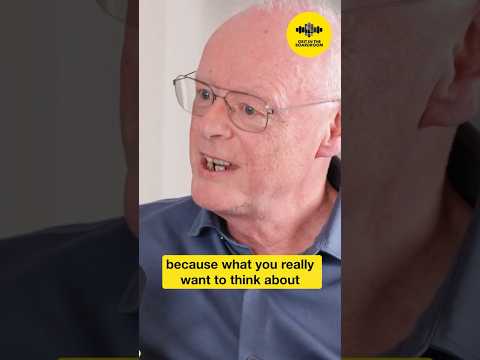
Boards Have To Acknowledge There Will Be Failure | David Downs
Ask about Grit in the Boardroom
Episode Description
David Downs, CEO of Education New Zealand, on why boards overseeing innovation should think about risk as a portfolio, not a threat.
Read the full transcriptHide the full transcript
- Boards who sit there and are in and responsible in some way for some sort of heavy innovation type organization have
- to have a different way of thinking about um the risk of innovation and have to almost acknowledge from the outset
- that there will be failure and there will be dead ends and there will be money that you know might seem wasted in
- inverted commas. And in medical innovation in particular, there's a lot you have to go along down a lot of blind
- alleyways before you you know you find the way the pathway. And so that so taking a traditional risk-based approach
- and therefore avoiding risk is not the way to do it because you're just going to not uh
- do enough work. So you guys have got to think about a risk spread. Again, it's about it's probably about like in in
- sort of investment world where you're saying actually we're we're going to take 10 bets and we're we're hoping that
- one of them will be spectacularly successful. We're prepared for eight of them to be a failure and one to just
- sort of burble along. And if you if you're okay with that um as a as a kind of an overarching
- framework. Now what you don't want to do though is use that therefore just to make dumb decisions. And that and that's
- the that's the tension point. Now I say directors or whoever can sit there and go okay, we're prepared for this. That
- doesn't mean that we're not trying to make every single thing successful uh and we work our hardest to make sure
- it will. It it'll just mean that we are open to possibilities that have a a lower chance
- of of you know of fruition coming to fruition. Um but I don't think it's it's something that you can avoid when you're
- in these sorts of organizations. Again, medical in the medical world that I'm involved in there's there's actually
- another layer. You talked about sort of making these decisions. The other layer in the medical system is almost an
- ethical one. Um and this is one that we faced at my role at the Malaghan Institute. Um you know we have a a
- medical innovation that's we know is successful CAR T-cell therapy with a particular construct that we've created.
- Uh we have to go further than we've ever gone before in terms of the commercialization journey. Uh but what
- we realized is if we didn't um there was a sort of ethical um dilemma that no probably no one else would and that
- that innovation was sort of set on the shelf which is not only a kind of a waste from
- an investment point of view but actually meant patients weren't going to get the
- benefit from it. And you sort of when you step back and think of what is the purpose of the organization, it's
- actually ultimately to um that research will save lives. That that therefore became okay
- it's less of a difficult decision. We are going to follow through on this investment. We are going to take on this
- extra risk because it's the best way to get closer to the purpose that we've created for ourselves.
Brief Summary
Medical innovation requires accepting failure and ethical responsibility to ensure patient access to treatments.
Key points
- The Risk of Innovation. Organizations must embrace risk and accept failures to innovate effectively. 'You're just going to not do enough work.'
- Ethical Dilemmas in Medical Innovation. Facing ethical dilemmas, organizations must prioritize patient benefits over investment concerns. 'It's less of a difficult decision.'
Episode highlights
- The Risk of InnovationOrganizations must embrace risk and accept failures to innovate effectively. 'You're just going to not do enough work.'0:31Oct 1, 2026
- Ethical Dilemmas in Medical InnovationFacing ethical dilemmas, organizations must prioritize patient benefits over investment concerns. 'It's less of a difficult decision.'2:15Oct 1, 2026