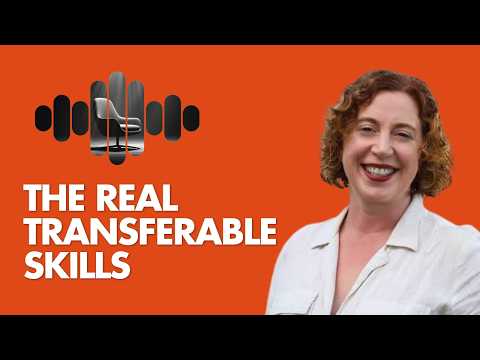
The Opportunity Committee | Cassandra Crowley
Ask about Grit in the Boardroom
Episode Description
Erika Eliasson-Norris sits down with Cassandra Crowley, a lawyer, accountant and seasoned chair who, as Erika puts it, has permission to offend both professions. She uses it brilliantly.
Together they dig into the boardroom decisions and leadership decisions that separate box-ticking boards from truly great ones. Cassandra makes the case for renaming the risk committee the "opportunity committee", arguing that exceptional risk management looks to the horizon rather than back through a pile of assurance papers, and that "motherhood and apple pie" risk registers waste the chance to optimise a business. She also shares the one question she asks in every risk report and investment decision, a masterclass in strategic decision-making and high-stakes strategy: what would need to be true for this to go right, and what would need to be true for it to go wrong?
Drawing on her recent work restoring functioning governance arrangements, Cassandra offers rare chair perspectives and governance lessons on what happens when governance breaks down, whether through corporate scandal or slow-burn dysfunction. "The board casts a long shadow," she warns. You can clear out an entire board and change every setting, but if management doesn't change, the culture won't either. It's a sobering take on company culture change, business resilience, and the trust it takes to rebuild an organisation that remembers everything.
Why does a new highway belong to the board of decades ago? Why can you buy turnaround expertise but not curiosity? And why is not wanting to rock the boat one of the most dangerous things in a boardroom? Cassandra answers all three, with C-suite insights, management case studies and turnaround stories along the way. It's director dialogue at its sharpest on board effectiveness, leadership and growth under pressure. Her parting word on imposter syndrome: "You will always be the worst version of yourself when you're trying to be somebody else.”
What you'll find in this episode:
· What a legal brain notices that an accounting brain misses, and vice versa
· Why risk committees should really be called opportunity committees
· The two-part question that reveals how deeply an executive has thought about risk
· How to stop a risk register becoming a document of history
· Why the board casts a long shadow, and where to start when governance breaks down
· Why changing the board without changing management won't change company culture
· How celebrating your predecessors helps boards think in decades, not quarters
· Why excellent directors are never afraid of silly questions, and why not rocking the boat is so dangerous
· Why strategy is the one judgment call governance should never outsource to a framework
About the Guest: Cassandra Crowley grew up in Taranaki on New Zealand's North Island and studied law and accountancy before becoming the youngest person ever to serve as President of Chartered Accountants Australia and New Zealand. A Fellow Chartered Accountant and barrister and solicitor of the High Court of New Zealand, she has more than 20 years of governance experience. She is Deputy Chair of NZ Transport Agency Waka Kotahi, where she chairs the Risk and Assurance Committee, Chair of Southern Cross Travel Insurance, and a director of Silver Fern Farms and South Port NZ. She has been recognised for her governance leadership, including the Women of Influence Board and Management Award.
About Grit in the Boardroom Grit in the Boardroom is a bi-weekly podcast where Erika Eliasson-Norris sits down with the best in business for executive interviews. She and her guests explore corporate governance beyond the sealed doors of the C-suite.
About Erika Eliasson-Norris As Governance Assessor for the Post Office Horizon IT Inquiry, the largest public inquiry in UK history, Erika Eliasson-Norris is helping shape accountability, governance reform, and corporate oversight across the UK.
Read the full transcriptHide the full transcript
- You will always be the worst version of yourself when you're trying to be somebody else. Your best chance of
- success is being who you are. You don't know it all. Governance isn't at the top
- of the pyramid. It's a part of a really critical living organism that is governance of an organization. The board
- casts a long shadow. Five years after >> [music] >> um a governance receipt, there were
- still people in the organization who were referencing it. Some of those people weren't even there [music] at the
- time. And it becomes part of the memory or the DNA of an organization. >> My guest today grew up in New Zealand's
- North Island. She went on to study law and accountancy and was the youngest person ever to become the president of
- the Chartered Accountants Australia and New Zealand. She's gone on to chair and sit on some of the country's biggest
- boards and has been recognized for her governance leadership. For her, it's all about giving people the opportunity to
- learn and grow. Cassandra, welcome to Grit in the Boardroom. >> Thank you. >> So, you are qualified in both
- accountancy and law. So, you have permission to offend both professions in my view. Um
- what does your legal brain notice that your accounting brain might miss and vice versa?
- >> It's really interesting cuz I think by the time you get to the boardroom, you
- everyone comes with a functional domain history and how that uh presents in the boardroom can be different. But, if I
- make a lot of generalizations, I think lawyers uh generally more attuned to understanding the risk uh in a
- situation. And accountants are generally more attuned to uh looking at the economics. Not exclusively, but uh I
- often joke that sometimes you can have to translate between the people that can read the words and the people that can
- read the numbers. >> Yeah, it's absolutely true. And when you point out those particular points, Do
- you think that the way that you interact on the board changes with both of those
- different kind of perspectives, the like say the written word, the numbers, cuz you have a blend of the two. How do you
- make that work? >> Oh, I don't know how I make my brain work. Um, I think when you sit around
- boards with people for a long time or from a certain um background or history, one engineer that you have turning up in
- front of you doesn't present like another engineer. And likewise, one individual who has an engineering
- background may present very differently on a board uh, let's say in 2020 than the same person presents in 2025.
- And I think how each director brings their functional executive expertise and applies it in the boardroom really
- shifts and morphs over time through experience and the conversations that are being had around them. Uh, poor
- directors don't. >> And have you had experience of that? >> Sometimes you see people who get to a
- certain point in their life or career and think, "Right, governance is next. I'm over a full-time role. Don't want to
- be a CEO anymore. I want to play more golf. I want to travel. I'm going to be on the board." Or conversely, you have
- people who think, "This looks really easy and I want more flexibility in my life and I'm going to be a director cuz
- it's really well paid and easy." And I think when you see people that turn up in those circumstances without
- having the understanding of the breadth of um, what a board is faced with, legal applications and otherwise, in
- that executive context to understand from a cultural perspective how a board needs to interact with an executive,
- that's when you can see people not excel as directors. >> Yeah. Do you think it's a skill that can
- be trained into people? >> People can become better at the craft of being a director.
- Some people innately, whether through their their training, their roles and experience, or the way they think, the
- way they wired, uh, will find that easier than others. >> This podcast is brought to you by Beyond
- Governance, a multi-award-winning, full-service governance consultancy. At Beyond Governance, we work with boards,
- executives, and organizations who want to get governance right, not just on paper, but in practice. Whether that's
- navigating risk, strengthening board effectiveness, or building the kind of resilience that holds up when it really
- matters. That's what we do. If you shape strategy, oversee risk, and influence company value at the highest level, head
- to beyondgovernance.com or click the link in the episode description to learn more about how we can work together.
- Now, let's get back to the show. >> You've chaired risk and assurance committees in major organizations,
- and audit and risk committees can easily become very backward-looking. Um [snorts] rooms kind of full of assurance
- papers. What does an exceptional audit and risk committee spend its time doing if it's different?
- >> I sometimes joke that we should rename risk committees opportunity committees,
- and I'm not really joking because the worst sort of audit and risk committee spends its whole time on on compliance
- and assurance, looking backwards, saying we ticked all those boxes. An exceptional risk committee is focused
- on the horizon. What are the things that are going to happen in 5 years time, in 12 months
- time, at the end of this project, uh in looking for how it can mitigate, and also in a commercial context, in the
- commercial entities, how can I exploit this risk here for return for for my shareholders and stakeholders. And um
- I think if you're not willing to approach something with more than making sure the
- accounts are correct, and there are you know, people who add up columns, uh making
- sure that all the assurances third parties have given to you have been received and noted, um then you're not
- really doing the role. You're not doing the work of what a really great uh uh audit and risk or risk and assurance or
- risk and sustainability, whatever the the title might be, uh director and committee members should be offering to
- a a business. >> And how do you stop a risk register just becoming a document of history that
- maybe gets reviewed or ticked through at various different points and not really
- looked at? >> One thing I think we all have a tendency to do in a busy world is have quite
- tightly packed agendas >> That's right. >> in committees. And um you need to have
- sufficient time that you can dig into not, you know, in some organizations even the the top 10 or the the critical
- few um risk registers are going to be really meaty items. How do you create sufficient time to really interrogate
- management and you know, ask the question not only who's managing this, who's accountable, um where's the
- oversight and governance around that, but what more could we be doing as a board? Do you have enough resources for
- this? Is this a risk that we can even control? Um you know, some of the things that I
- see on a mature risk registers are things like, you know, the government might change.
- >> [laughter] >> Great. There's going to be an election the government will change. Are you
- actually saying, you know, how are you positioned to respond to the policy changes? What are you doing about it? Um
- making sure that you don't accept what I refer, you know, motherhood and apple pie statements that are so
- ubiquitous in high level that no one can ever uh disagree with them. How are they
- granular to that company? And if it was presented in another company, you think,
- well, what's that about? Whereas I think sometimes we at a governance level aggregate things up to such an extent
- that geopolitical risk increased um inflationary pressure on imports. Uh if that's how you're describing your
- risks, you're missing an opportunity to manage them and optimize your business or organization for them.
- >> Mhm, absolutely. And what is one question that you regularly ask that tells you more than
- another page in a risk report? >> It's a question I ask not only necessarily in risk reports, but when
- you're making investment decisions. >> Okay. [laughter] >> And it's um what would need to be true for this to
- go right, and what would need to be true for this to go wrong? Because the responses, it's not that you
- can necessarily control any of that. >> Yes. >> But the responses that a seasoned executive will give you to
- that, you know, will show the depth of thinking that they've put into understanding the
- risks in a project, the risks in a a business line or an operating situation. Uh
- the less mature, the less sophisticated the mitigations, the more difficult the response to that
- comes. And if they can say, well, you know, we've got this massive IT project and you know, the vendors might not be
- able to deliver or this might not happen or that um interoperability might fail, the
- very conversation that flows from that shows you the extent of their their thinking about how they how they
- actually manage it. >> And we touched on this a little bit. So, infrastructure decisions can shape um a
- country for decades, while executive incentives and board terms are comparatively relatively short. How do
- you make a board genuinely think well ahead, maybe decades rather than just simply the long-term view of their
- incentive plans? >> I think it starts with recruitment. Um and you know, we've got some really
- interesting models here in New Zealand with the uh dominance of the cooperative model in
- our primary sector, which is still a very, very important part of our economy. And the people who are
- attracted to that, and what does that mean, and how does that fit with the values of the of the
- business? And the crown context, um like government governance roles across across the globe, they're generally not
- as lucrative from a a fee incentives as others. How are you ensuring that you get the
- right people that are there for the right reasons? So, I think at a governance level it really comes down to
- what are the values of those people? And how do you assure yourself that the constraints you put around them as a
- shareholder or a stakeholder appropriate in getting those outcomes? In terms of executives, it's actually
- much easier if you take the setting of KPIs and STIs and LTIs seriously. And I think that's an area that we really
- struggle with. Um what's in general? It's not terribly sophisticated. I chair a financial services company
- that straddles Australia and New Zealand. In Australia, there's limits about when those sorts of incentives can
- vest. And all of these things come together to sometimes leave you with a non-optimal basket of options. But you
- if you put the work in and do those things and fundamentally it all comes back to culture and time.
- And if you spend time celebrating the things that your predecessors put in place,
- so for example, I sit on the national land transport organization here NZTA. And you know, an opening of a highway is
- not the work of the chief executive or the board chair of the day. It is decisions that were made earlier. And I
- think part of the culture of helping people look forward is about ensuring that they celebrate the
- decisions that their predecessors made and the contribution to it. And if you have that culture and if you
- have that alignment where people realize that they're not in this for this quarter, they're not in it for this 12
- months, then you have a chance at being successful. >> That's really interesting. And you've
- recently been involved in work supporting the restoration of functioning governance arrangements.
- And without going into anything confidential, when governance itself has broken down, where do you start?
- Structures, people, trust, information, decision rights, or something else? >> I think one of the most important things
- to remember in a governance environment, whether it's functional or dysfunctional, is the board casts a long
- shadow. And when you have a complete or semi breakdown of a governance structure, you just start
- with some of the basics. You know, what is the authorizing environment? Do we have the right delegations in place?
- What is the cadence of meetings? That's all great, but they're really hygiene factors. What it comes down to is having
- an environment that reshapes the shadow that that that governing body casts. Um setting the tone and culture, being
- really clear about acknowledging the failure. Uh and what that meant for the people
- and the executive and management team it left behind. And setting new expectations. And
- usually the words need to come about saying we are here at any time if you feel this happens. Um I worked with an
- organization where uh you know, 5 years after um a governance receipt, there were still
- people in the organization who were referencing it. Uh some of those people weren't who they
- were at the time. And it becomes part of the memory or the DNA of an organization. So, governing
- bodies need to work really hard to ensure that the shadows that are cast um are not ones that that create a world
- that's not very nice to be in. And acknowledge that organizations have memory and history that outlasts any
- individual as well. >> Absolutely. And what mistakes do organizations make when they're trying to fix governance
- too quickly? >> The complexity of the trust environment that needs to operate between an
- executive and a governance group in order for it to be successful. You can clear out an entire board, you
- can change all this the settings, but if you've had a management team that hasn't
- also changed, there is a fear, a trauma, a pattern of behavior of are these guys
- going to be any better than the last lot? What has really changed? You know, the
- the majority shareholder put the last lot in and they put this lot in as well and is it
- different? They're saying all the right things, but how do I trust them? And when you get to a point of
- severe governance failure, your management team has got really successful at operating, rightly or
- wrongly, with a lot of workarounds and it takes a long time for things to normalize and regularize.
- >> Hi everyone, your host Eric Relles and Norris here. I want to take a quick moment to talk about something close to
- me. Every conversation I have on this podcast comes back to the same thing, the pressure of making high stakes
- decisions with real consequences and doing it with integrity. That's exactly why Beyond Governance exists. We partner
- with leaders and boards who refuse to treat governance as a box-ticking exercise because the cost of getting it
- wrong is too high. If that resonates with you, go to beyondgovernance.com or click the link in the episode
- description to explore what we do. Right, now back to the show. >> Looking across your experience, you've
- worked in a number of different sectors. People often talk about transferable skills across boards.
- What genuinely does transfer in your eyes across every boardroom and what do you think maybe sometimes people don't
- understand about some of the non-transferable aspects with working on different boards in different sectors?
- >> Curiosity, collegiality, um ability to build that relationship with management where you interrogate,
- you hold them to account, but they also have a level of trust and support um that they feel from you.
- >> [gasps] >> You can have experience and mergers and acquisitions, transformation,
- turnaround, digital projects, uh IPOs, you name it. But um um that's all something that you can pay
- usually an advisor to get and you can expect your management to do. When I think about transferable skills that I
- value, um you know, when I'm a chair selecting new directors in the boardroom, it's that innate curiosity,
- the ability to work with the team around the table, not only just governance, but
- also management, to make the organization be something special. What would you say
- >> is one of the first things that you try to learn when you go into a new sector?
- >> What makes us money is always a really good one if it's a commercial board. Uh and who controls and influences
- decisions within the supply chain outside of the business, I think, you know, sitting at the at the bottom of
- the world in New Zealand is something that can be interesting, but as we imagine heights as well.
- Um and to understand the cultural dynamics both in the boardroom and in the management team
- um and elsewhere in the organization, you sometimes walk into organizations and realize that no one on the executive
- has any control and it's um Bob in accounts and Leon on the manufacturing room floor and, you know,
- they're they're running the business. Understanding the unwritten rules of of how things work.
- >> In that situation, there can be a vulnerable moment for directors when everybody else in the room appears to
- understand something that you don't. What do excellent directors do in that moment?
- >> I think an excellent director isn't afra- afraid of silly questions and I would in fact say that
- would be most comfortable asking them. That innate curiosity is really, really important. And so and most people will
- understand if they're asking a question that everyone else in the room appears to understand, usually everyone else in
- the room doesn't understand it. And we can all count on multiple fingers the number of times
- we've been in rooms and someone else said, "Well, I was wondering that, but I didn't I didn't want to ask cuz I was
- worried we needed to get to the next agenda item or I I thought I'd miss something or I didn't read my minutes
- from the last meeting properly." I you know, and I think that desire to not rock the boat and keep things going
- is one of the most dangerous things in a boardroom. >> And you became president of the
- Chartered Accountants Australia and New Zealand at a comparatively young age. When you enter a room where people are
- older, maybe longer tenured, or more traditionally, let's say, credentialy set up for that particular role,
- how do you establish authority without trying to perform that authority? >> It's interesting, isn't it? Even the
- framing of that, establishing authority. Um one of the things, rightly or wrongly, I do is just be me. And I think
- if there is a group of people, uh my peers, who put me in that position, uh all as you mentioned, maybe more
- traditionally credentialed, there's something that they're seeking you to bring. And uh I think for any of
- us, you know, we talk a lot about what is imposter syndrome, and um particularly
- for women, it can become a a topic of of great discussion. You will always be the worst version of
- yourself when you're trying to be somebody else. Uh and your best chance of success is being who you are. Uh
- there are reasons that you end up in situations. Some of them aren't always great, but once you're there, leaning
- into who you are, not being afraid to ask the silly questions, understanding where your weak weaknesses are, uh
- reaching out for support, all of those things I think can make anyone um excellent in most situations.
- >> And is that something that you've built up over time to have that perspective,
- or is it something that you've just always had? >> I'm not sure, and it's interesting when
- you uh in groups of directors, and you know, I've spent over 20 years at governance now, which um some people are
- are still surprised at given my age and stage in life. And sometimes I wonder the conversations you have with someone
- who you've been talking to for 20 years, have they changed because you've been having those conversations for 20 years,
- or have they changed because the nature of your conversation has changed because
- of the wisdom you've brought to it? And I don't think there's any easy answer to
- that question. Um I think some people naturally have an outlook that's more open to others helping. Uh maybe
- it's more self-aware, maybe it's less um confident and brash. I'm not sure, but I
- think the biggest point is having the self-reflection to know that you don't know it all. You pay play a part as a
- director um as a leader in the governance environment and an ecosystem where governance isn't the top of the
- pyramid. It's a part of a really critical living organism that is governance of an organization.
- >> And final question for you. What judgment call has governance taught you never to outsource to a framework?
- >> Strategy. Where do we want this organization to be in 5 years' time, 10 years' time, 30
- years' time? Um we can see boards in New Zealand in particular sometimes we have
- a cultural cringe, and we want to bring in a brand name consultancy. I think, you know, having close relationships
- with your shareholders and being very clear on the value and vision that they have, you are best placed to find the
- way out of that. >> Erica again. I'm so excited to share my final thoughts on today's conversation
- in just a moment. But before that, a very quick reminder about Beyond Governance. If anything in today's
- conversation has got you thinking about your own organization's approach to governance, risk, or board
- effectiveness, Beyond Governance is here to help. Find out more at beyondgovernance.com or grab the link
- from the description. I really enjoyed my conversation with Cassandra today. [music]
- She asked a very important question. How do you change culture? We can clear out
- the board, of course. You can also change the systems and the processes, but she was very clear that if you don't
- change management, you won't change the culture. I also thought it was fascinating what Cassandra said about
- committees. She said that you should rename the risk committee as the opportunity committee. So, have a think
- about that. How can [music] you look at opportunities beyond just making sure that the totals add up and that the
- columns are all there from the spreadsheet? I'll leave you with the question Cassandra asked, not only when
- she approaches risk management, but also around investment decisions, too. What would need to be true for this to go
- right and what would need to be true for this to go wrong?
Brief Summary
Cassandra explains how boards can turn risk oversight into forward planning, rebuild trust after governance failures, and set strategy for the long term.
Key points
- Risk committees should look to the horizon. Cassandra argues that exceptional risk committees do more than review compliance and assurance. They look ahead, interrogate emerging risks, and consider how to turn risk into opportunity.
- The question that tests a decision. Rather than relying on another page in a report, she asks what would need to be true for a decision to succeed or fail. The answers reveal how deeply executives have thought through the risks.
- Governance failures leave a lasting shadow. Even years later, people may still refer to a governance failure, and its memory can become part of an organization’s DNA. Boards need to acknowledge what happened and deliberately reshape the culture they leave behind.
- Ask the question everyone else is afraid to ask. Cassandra says that when a room seems to understand something you don’t, chances are others are confused too. Staying quiet to avoid rocking the boat can be dangerous in a boardroom.
- Be yourself in the boardroom. On entering rooms where others may seem more experienced or credentialed, Cassandra’s approach is to be herself, ask questions, and seek support where needed.
- The value of knowing what you don’t know. Cassandra says self-reflection matters: directors play a part in a wider governance ecosystem, not at the top of a pyramid.
Episode highlights
- Risk committees should look to the horizonCassandra argues that exceptional risk committees do more than review compliance and assurance. They look ahead, interrogate emerging risks, and consider how to turn risk into opportunity.“An exceptional risk committee is focused on the horizon.”5:07Oct 21, 2026
- The question that tests a decisionRather than relying on another page in a report, she asks what would need to be true for a decision to succeed or fail. The answers reveal how deeply executives have thought through the risks.“What would need to be true for this to go right, and what would need to be true for this to go wrong?”8:01Oct 21, 2026
- Governance failures leave a lasting shadowEven years later, people may still refer to a governance failure, and its memory can become part of an organization’s DNA. Boards need to acknowledge what happened and deliberately reshape the culture they leave behind.“The board casts a long shadow.”11:53Oct 21, 2026
- Ask the question everyone else is afraid to askCassandra says that when a room seems to understand something you don’t, chances are others are confused too. Staying quiet to avoid rocking the boat can be dangerous in a boardroom.“An excellent director isn't afraid of silly questions.”17:10Oct 21, 2026
- Be yourself in the boardroomOn entering rooms where others may seem more experienced or credentialed, Cassandra’s approach is to be herself, ask questions, and seek support where needed.“Your best chance of success is being who you are.”18:59Oct 21, 2026
- The value of knowing what you don’t knowCassandra says self-reflection matters: directors play a part in a wider governance ecosystem, not at the top of a pyramid.“the biggest point is having the self-reflection to know that you don't know it all.”20:17Oct 21, 2026
- Don’t outsource strategyAsked what judgment call should never be handed over to a framework, Cassandra answers: strategy. She emphasizes understanding shareholders’ values and vision.“Strategy.”20:48Oct 21, 2026
- Changing culture means changing managementErica highlights Cassandra’s point that changing boards, systems, and processes isn’t enough if management stays the same.“if you don't change management, you won't change the culture.”21:50Oct 21, 2026