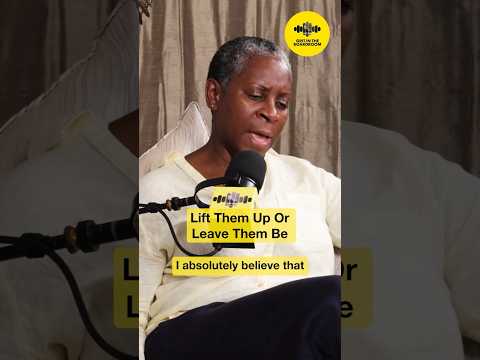
When Your Name Is in the Redundancy Envelope | Grit in the Boardroom
Ask about Grit in the Boardroom
Episode Description
Real leadership is not taught overnight. It is what happens when you see your own name in the redundancy envelope, deliver the speech anyway, and then ask: who is the safety net for the person at the top?
In this episode of Grit in the Boardroom, Erika Eliasson-Norris, CEO of Beyond Governance, sits down with Dr Heather Melville OBE for one of the most powerful executive interviews on what it truly means to lead through adversity. With over 40 years spanning financial services, technology and corporate banking, Heather brings the real c suite insights on leadership decisions, company culture change, and why boards must stop thinking diversity and start thinking inclusivity.
From founding the RBS Focused Women's Network to advising FTSE CEOs in an advisory capacity at Stork & May, Heather has lived the boardroom decisions that define organisations. She shares unflinching stories of business resilience, composure under fire, and the moments of strategic decision making that shaped her career and the careers of those around her.
Together, Erika and Heather explore the corporate governance questions boards are still getting wrong, and why risk management starts with the culture you build, not the policies you write.
What you'll find in this episode of Grit in the Boardroom:
Why composure under pressure is a learned skill, and what happens when leaders see their own name in the redundancy envelope.
How company culture change starts with small gestures of elegance and empathy from the top.
Why boardroom decisions around diversity fail when they focus on numbers instead of inclusivity.
How volunteering and women's networks create chemistry that transforms board effectiveness from the inside.
The difference between sponsorship and mentoring, and why leaders need both to drive growth under pressure.
Why words have consequences, and how one organisation's failure to act led to complete collapse: a corporate scandal case in governance lessons.
How leaders can be their authentic selves while navigating the performance expectations of the c suite insights world.
What boards and chairs must understand about building safety nets for leaders through better risk management and support.
Why high stakes strategy demands emotional intelligence and not just operational excellence.
How turnaround stories often begin with a single person who believed in something bigger than profit.
About the Guest Dr Heather Melville OBE is a Partner at Stork & May and the 7th Chancellor of the University of York. Awarded an OBE in 2017 for Services to Women and Diversity, Heather's 40-year career has spanned HSBC, NatWest, IBM and PwC, and she has served as Senior Managing Director and later Senior Advisor at Teneo. She previously served as Trustee and Chair of the Chartered Management Institute (CMI); she is also Patron of Women in Banking and Finance (WIBF), and founder of the globally recognised RBS Focused Women's Network. Heather is known for her work helping leaders navigate strategic decision making, inclusion, and transformation, building high-performing diverse teams that deliver under pressure.
About The Host As Governance Assessor for the Post Office Horizon IT Inquiry, the largest public inquiry in UK history, Erika Eliasson-Norris is helping shape accountability, governance reform, and corporate oversight across the UK.
About Grit in the Boardroom Grit in the Boardroom is a bi-weekly podcast where Erika Eliasson-Norris sits down with the best in business for executive interviews. She and her guests explore corporate governance beyond the sealed doors of the C-suite.
About Beyond Governance Beyond Governance provides on-demand company secretarial support, governance advisory, and governance training to boards, Company Secretaries, and General Counsel. Beyond Governance help organisations strengthen governance, manage risk, and support critical projects without the need for permanent hires. Learn more here: https://beyondgovernance.com/
Read the full transcriptHide the full transcript
- They voted with their feet. When people vote with their feet through words, the outcome was absolutely they went
- bankrupt and nobody would buy from them anymore. There's something really special when you can get volunteers
- believing in something, not getting paid for it, giving up their time to do something. There's a special [music]
- chemistry that goes into the veins of the organization. The way he did it was with such elegance
- and I've all that always stayed in my mind as a leader. He made her feel quite special.
- >> Yeah. >> Because he just put his hand and shook held her hand like that. That's not
- something that you're taught overnight. That's something that comes naturally. That's that's a leader. Can you imagine
- if I was going to be a possible investor in this organization? My experience as an investor is as I walk through the
- door, I can't get in because I can't get through the turn styles. And that's the
- problem we have when we just focus on the diversity of something and not the inclusivity.
- My guest today has spent four decades operating in and around some of the UK's biggest institutions. As an executive,
- entrepreneur, adviser, and now chancellor of the University of York, Dr. Heather Melville, OBBE, built her
- career across organizations including IBM, HSBC, PWC, RBS, and TONO. At RBS, she founded the Focused Women's Network,
- which grew to 12,000 members across 33 countries. Today, she works with senior leaders navigating some of the most
- difficult moments of their career, stepping into bigger roles, stepping out of them, moving towards the boardroom,
- and working out who they are when the title changes. But this isn't going to be a conversation about Heather's CV. I
- want to get underneath what four decades of leadership actually teaches you about
- judgment, power, pressure, and resilience. What do you do when the organization around you is under
- enormous pressure? How do you know when to challenge and when to stay quiet? How
- do you tell whether a board is hearing the truth? And what happens to your judgment when you're frightened, tired,
- or personally invested in the outcome? Heather, you've spent much of your career working inside large complex
- institutions where decisions have consequences for thousands of people. I'm interested not so much in what a
- leader does when everything is going well, but what happens to us when the pressure really arrives. when an
- organization enters a period of genuine uncertainty or crisis, what changes in the behavior of otherwise good leaders
- and what should they be watching for in themselves? >> So I think the first thing really is
- about uncertainty and fear. >> The minute there's going to be a big change, the first thing people think am
- I going to lose my job? >> Yeah. >> And losing their job means am I going to lose my home? Am I going to lose my
- family? So that's the first thing. And then people's behavior because it's not informed about what the future holds
- tends to be very much about well I need to do this to protect myself or I need to do this to protect my team. Um and
- lose sight of the bigger challenge that sits around them. If the organization doesn't exist, no one's going to be
- beneficial. And that's a time when you've really got to test good leadership because a great leader will
- stay silent, watch, observe, take care of the people around them and actually themselves laughs because they tend to
- know more of what's going on um than the average employee. But you normally notice that great leaders are very
- confident and very calm. If you look at some of the politicians um that when they're, you know, they're delivering
- bad news, they know the real stuff behind it, so they can deliver it to us in a way that's a bit more controlled.
- So that's the observation I I've seen of many great leaders. >> And how do you build that?
- >> Well, that's confidence over time. Um because when you're in the know, you're
- in the know. So I always think, you know, one of probably the toughest times that I went through and it's quite
- comical when I think about it is we had a restructure and I knew that elements of my team were going to be impacted by
- it. And on that day, it was just a very silly mistake that someone made. the envelope that had my name was on the
- top and I had to be delivering this speech to people in the team forgetting that I'd seen my name. Having said that,
- my boss had caught me to one side and said, "I don't want you to worry about this. You'll be taken care of." And I
- had to really believe that because in that split moment when you see your name, you think, "Oh my goodness, am I
- going to lose my job?" But I just I'm a very good actress. I just had to pretend
- I didn't see it because I had to think about the script that I had to deliver. The tone of my voice had to be in such a
- way that people would believe me and understand this isn't a personal thing. It's a business decision because 99% of
- the time it's a natural thing for us all to think it's personal. >> Yeah. And obviously you were able to
- control your emotions in that moment, but how did you feel when you found when you saw your name on?
- >> Well, I think sick when I saw my name because that was a reality. >> Yeah. >> But the actress in me said, "Come on,
- girl. You got to do this. You've got all these people in the room. You've got a message to deliver." And I think at that
- time in my career, that's when I realized the role of a leader and how they have to put on another face to deal
- with everything that happens around them all the time to either communicate to their investors or to communicate to
- their teams or even to communicate to their families. Um, and this is why the work that I do now is so important
- around helping leaders because actually who is their safety net? >> Absolutely. And what sort of questions
- do you ask people to kind of probe into how they would maybe react in that situation to prepare them in advance
- because obviously unless you're there you don't experience it. >> I think the first question is how do you
- feel about it? And that question can open up a whole realm of other questions. You can tell by someone's
- eyes did they know about it? Was it a genuine shock? Do they feel they're being pushed out? Is it fear? Is it is
- it a message I've got to communicate? All of that. Typically, when you ask somebody how they're feeling, that first
- question kind of it becomes it normalizes it a little bit because in the process, no one asks or cares about
- how you feel. They just care about delivering a message. And really, when you're working with people and people's
- emotions, you've got to really get to the heart of that first. This podcast is brought to you by Beyond
- Governance, a multi-awward-winning full-ervice governance consultancy. At Beyond Governance, we work with boards,
- executives, and organizations who want to get governance right, not just on paper, but in practice. Whether that's
- navigating risk, strengthening board effectiveness, or building the kind of resilience that holds up when it really
- matters. That's what we do. If you shape strategy, oversee risk, and influence company value at the highest level, head
- to beyondgovernance.com or click the link in the episode description to learn more about how we can work together.
- Now, let's get back to the show. What are your own personal warning signs and what have you seen in other people as
- the situation progresses, the pressure builds? What do you see in yourself before you get to that point? Because
- obviously the feeling just comes just naturally, right? But it does, as I mentioned before, I think the biggest
- thing is fear >> and fear drives the different behaviors. And so when you're fearful, that's not a
- good place to operate from. So if you think you're going to lose your job, then you're going to lose your job. If
- you think actually this is a process, let me focus my mind on what I've got to do during this process. Because one of
- the things I've learned throughout my career during these difficult times, someone's observing your behavior and
- they see how you deal with it and that will determine whether or not they think you'll be good enough, confident enough
- to be able to be part of whatever the future plan is. And I remember a boss saying that to me many years ago saying,
- "Heather, what you didn't realize," and it was when I didn't get a job. What you
- didn't realize is that we were observing you. And quite often how people behave when they're disappointed actually
- determines how they'll behave when there is a big decision that's got to be made
- that might not go into their favor. So in that particular situation, my role was to just keep on doing what I needed
- to do, which was I needed to deal with how I communicated to all of these people that worked for me. An example of
- that was you remember the crash in 2008, the financial crash. >> Yeah. >> That had a huge implication on the
- organization I worked for, but also the people who I led in my team. Most of them had invested all of their savings,
- their pension, everything in this organization. And so they would be expected to go and talk to clients. And
- that day I said to everybody, "Everything's canceled out of your diary. We're going to sit down
- together." Because I needed to know where their minds were. I need them to talk through how they were feeling so
- that tomorrow when they had to go and talk to those clients, they weren't necessarily going from a place of
- distrust or a place of shock and a place of fear. They'd been educated. We couldn't change the outcome there and
- then, which was a period of uncertainty, but we still had to talk to our clients.
- We still had to make them believe that there was an element of authenticity in terms of what we were coping with. And
- actually as an organization it was our duty to make sure that those clients felt safe.
- >> I remember from my own experience of having a takeover >> and having so many people instantly
- knowing that they were not going to have a job. >> But those ones that were retained for
- the handover period and to be fair some were taken on by the new employer. That wasn't a guarantee. But they performed
- so incredibly well during that period that they just showed their resilience essentially and like you say they were
- just going to get on with it. >> But I think in addition to what you've said, even if you are let go, you've got
- to remain your composure because if you want to work with head hunters or a future employer, they don't want to
- employ someone that's fair fearful or who's lost their confidence. They want somebody. This happens all the time. How
- do we compose ourselves that we can I say kind of put on our lipstick and get on with the job? And I'm not saying
- leave your emotions. Your emotions you share with your coach or you share with your family. But in the business world,
- it is a case of this h this happens all the time. So we need to put on our best put our best foot forward and carry on
- with what we need to do. And one of the uncomfortable realities of senior leadership is that the more serious the
- situation becomes, the more people look for certainty. And often at precisely that moment, that's when there is the
- least amount of certainty as to what the answer is. How do you lead people honestly
- when you don't yet know what is going to happen? And what do you communicate? And
- how do you communicate enough to create that confidence without giving false reassurance?
- >> So I think one of the things that's really important is don't lie. >> I have that as part of the mantra in
- everything I do anyway. But don't lie. And if there is a script, there's a script for a reason. And that is to make
- sure that everything that you say is backed up by the organization. It's the one time I absolutely think it's
- important that you do have a script because that script will make sure that the right language is used, the right
- message is heard by people. What you have to focus on as a leader is your tone. Your tone needs to be authentic.
- Uh you can't be there smiling while you're saying to people actually you're going to lose your job tomorrow, right?
- >> Yeah. So all of those things are really important and they're the things that
- you have to teach a leader who may not have been through that before. So um you know it's all about authentic. It's all
- about how people receive you as a leader and how you made them feel during that time because people understand we're
- going through a period of such uncertainty at the moment. And the one thing that is really clear is that
- people who have had great leaders have gone through those processes in a different way to those who are with
- leaders who are not so controlled and who are absolutely just thinking about themselves with a wrong tone.
- >> Yeah. And how do you coach someone? As you say, some people when they get fearful or nervous, they do things that
- they otherwise wouldn't like smile for instance. they just that nervous smile of like oh yeah and actually this as you
- say it's a completely inappropriate moment. How how can people like reform that habit? That's something that we do
- through coaching. I'm really excited about that because we do work with leaders and we do that kind of work so
- that they're aware of their body language. They're aware of as you quite rightly say some people smile a lot. Um
- some people will laugh but it's shock. It's like, you know, when somebody hears that someone's died, somebody might
- naturally start laughing, not because they think it's at all funny, but that's just how they react to it. But once
- again, it's you have to learn how to compose yourself in that way. Very few leaders, very few leaders at the top
- haven't done that kind of training because their comm's team will put them through press training. they'll, you
- know, they'll record them and then play it back and then look at how they come across which I think is really
- important. And when you're going to deliver those kind of messages to whether it's a nation as the prime
- minister or whether it's, you know, the chief exec of an organization, everything that you say in those first
- few minutes will be read a hundred different ways by different people. So the one thing that needs to be
- consistent is your messaging, your tone and how you come across. And that is where the training comes in. In those
- moments, are there certain things that leaders say or that you've heard people say that you just say just that that is
- such a bad idea? Any any examples you can give? >> I'm sure there are lots of examples. Um,
- I tend to also listen when there's a big announcement that's been made by either
- the government or a leader when they're talking about something and I watch I'll
- always watch what they say and I think you've not been press trained because you wouldn't have said that. So an an
- example of that if you can remember many years ago a very famous jewelers and within a few minutes their share
- price went down because of what that jeweler said. All of the loyal clients that shopped at that jeweler's decided
- they weren't going to shop there because he described the jewelry as cheap and crap.
- >> Yeah. And when you say something like that, what you then say to the person who's buying it is that you are you fall
- into that category. >> Yeah. >> And so they voted with their feet. When people vote with their feet through
- words, the outcome was absolutely they went bankrupt. Nobody would buy from them anymore. So it's really important
- to make sure that your words mirror the values of the organization and the message that you're saying. And that's
- why people are pressed. You'll recognize when people are talking on behalf of their organization that they have got to
- get every word right and every tone right. >> It's definitely something that leaders
- need to learn to be able to do that because after all we are interacting with people. That is it all the time.
- >> Absolutely. And organizations that don't invest in that regret it >> when they just roll somebody out in
- front of the camera. I mean, even what you wear and you'll notice that on the news when there's a death that's been
- announced of a very prominent person, everybody is wearing black. >> Yeah. And so that tells you a lot around
- about communication, how you show up and the message that you're going to be delivering and talking about. And I
- think that is really quite key. Moving on, we talk about crisis and as a kind of a dramatic event, but people inside
- organizations, they often see these things happening or brewing. They may not understand that it's got to that
- fever pitch yet, but that adrenaline sometimes after the event wanes. You have that initial issue challenge and
- then over the course of a number of days it dissipates. So that adrenaline has gone but the uncertainty is still there.
- How do you lead through let's say day 300 of a crisis rather than day one? because day one you have certain things
- that need to get done. Day 300 you're still in that uncertain moment potentially. How do you manage that?
- >> So one of the things that is quite clear is that when there is a board that board
- will get together on a daily basis sometimes twice a day as they're communicating a range of different
- things that happening in the organization that ripple effect their stakeholders their investors and making
- sure there's a plan. So nobody just gets up and just communicates there's going to be a big change in the organization
- without a really thought through structured comm's plan and without that rippling through the various parts of
- the business. So every touch point the same message is being relayed at the same time. There is nothing worse than
- different messages going out. And that's why at the top it's really important that an organization invests in a great
- comm's person that works with the board because that's it starts from the top. That's where the messaging is going to
- come down and to every single element of that messaging needs to be controlled especially when it's time critical and
- it's about either the sale or the purchase of an organization. And you'll notice that if there are two
- organizations coming together that the message is synced so that everybody knows at the same time because if they
- don't know all know at the same time somebody makes the assumption that perhaps they're going to buy us and
- they're going to get rid of us and that's it's the unspoken word. If it's not done in the right way people make
- their own decisions about what might be happening. >> How do you manage the the process? A lot
- of organizations, particularly listed organizations, will need to make an announcement as soon as they're certain
- that something is happening, but there's always that element of uncertainty because it might not happen. How do you
- control that? Because too much space and too much kind of, let's say, chatter >> can create its own whirlwind of
- problems. speaking too early and potentially getting it wrong or saying something before their people are really
- that certain is also risky. How do you balance that? >> So, having worked with lots of very
- senior people and senior people that get this right, >> the first thing that happens is the
- chief exec, the chair, possibly the CFO will have those conversations. Then they'll have the conversations with the
- board and and it'll probably be listed as a project. So nobody knows what's going on and they will not have those
- initial meetings in the building. >> Yeah. >> They tend to be external or they've got
- a code name and they will agree the messaging and the timetable before they then involve the rest of the
- boards. Then the board themselves will sit down and say right okay this is what we've agreed this is the messaging this
- is how we're going to deliver it. Because there is also, as I've mentioned in my previous answers, there is also
- the fact that investors [laughter] need to be part of those discussions as well and the communication that goes
- out. One leak at the wrong time can determine whether or not, especially if you're selling your business, whether or
- not it's a business that somebody wants to buy and that's critical. So I do think that the confidential
- conversations that take place between the boards that nobody goes outside of that and actually the one thing that a
- good chair does is he trusts and respects his board and that or his or her CEO that they know what they're
- doing and they're working together. And so what I've seen is that when there is a crisis and if we think about COVID,
- >> there were meetings, copious meetings throughout the day because it changed which meant that in organizations
- we had to adapt to that >> and so we would wait to hear a message from the comm's team that had been signed off
- by the board around what the next steps are that we would take. And so I think CO is a great way to show how
- organizations all had to work to a certain time scale to also make sure the messaging was correct that they were
- given to their people. And I I also remember when everyone had to was told with a day's notice, no one's going into
- work. >> Everyone has to work from home. Uh and for some institutions that was just
- unheard of. You know, they didn't want people to work from home on Fridays. Yeah. And now they were sending their
- whole businesses home to work from home for an indefinite period. That in itself
- had to be managed really really elegantly, very timely and very precisely >> and from an investor perspective, what
- sort of communication do they need? What are they what are they looking for? >> Well, I guess the important thing for
- them is knowing that the organization is going to be stable. Yeah. >> And so all of the communication that
- needs to go out needs to ensure that the last thing an investor needs is information that kind of unnerves
- everybody because it unnerves the market. And you know if I use a simple analogy is the oil crisis with what's
- been happening in the Middle East up and down. You know, if a certain individual says
- one thing, you see the prices go up or there's a big crash. And the the last thing that any strong
- good investor wants is they want to have stability in the market. >> Yeah. Because it isn't necessarily just
- their own perception of I understand where this is going. They may have some ideas on what that means decoded, but
- the reality is that if nobody else understands that and there are a lot of retail shareholders for instance, then
- that can really >> the uncertainty things go up and down and that I mean just look at petrol
- prices. >> Yeah, absolutely. Hi everyone, your host Erica Norris here. I want to take a
- quick moment to talk about something close to me. Every conversation I have on this podcast comes back to the same
- thing. the pressure of making high stakes decisions with real consequences and doing it with integrity. That's
- exactly why Beyond Governance exists. We partner with leaders and boards who refuse to treat governance as a box
- ticking exercise because the cost of getting it wrong is too high. If that resonates with you, go to
- beyondgovernance.com or click the link in the episode description to explore what we do. Right now, back to the show.
- At RBS, you created the focused uh women's network and it grew to around 12,000 members in 33 countries. That's
- quite impressive. You don't build something like that at scale simply by having a good idea. You have to have the
- institution behind it that really wants to make it work as well. When you're trying to change something in a large
- organization, it can be quite challenging at times. um how do you work out where real power sits to be able to
- make that particular change rather than just looking at the organizational chart
- as to where actual power sits. So it's such a long time ago. It's almost 20 odd years ago that we did
- that. And the big thing for me I think is that setting up that network really was something that I was quite
- passionate about. I'd worked in other organizations in IBM where I could see lots of senior women and I could see
- that they had great careers. They were role models. And when I came to work in some of the
- other organizations, there were senior women there, but you didn't see them. They were silent.
- >> Right. Interesting. >> And actually, for me, in that moment in time, if you're a young woman and you're
- trying to build a career, it's really important that you can see others. And so the whole idea behind it for me was
- around how can we create something that is not a group of people that are moaning but it's something that is
- really going to complement what the organization's trying to do. And so the thing for me is always about talent,
- access to talent. I always thought about the organization and I didn't just think, oh, we're going to create a
- network and that was it. I created a network that was in line with the actual objectives of what the organization
- wanted to do. I've been very clever. I'd been through IBM sales school and the thing that you need to do is sell
- something to someone that somebody wants. So creating something that had that was in line with our own vision as
- an organization meant it was very hard for people to say no. And I can remember one situation which was quite quite
- funny actually at the time. um the chief exec who was my sponsor of it and I was
- going to leave the organization and when I told her I wanted to set this up and she said I'll sponsor you
- >> amazing >> because she knew that was something that was really passionate and that's what I
- say about a great leader great leaders know their people it wasn't really about money but it was about the ability to
- create something that was going to make something for other people as well as for me
- and I remember her saying you know let's go and investigate what that might look
- like and so the first thing I did is I created a plan. I remember her saying at the time that you know there were some
- people that sat around her boardroom table who made comments like what are they going to be doing? Are they going
- to be knitting and making jam? Oh no. >> And I went okay now I know where that person's mind is. Right. Let me go and
- spend some time with him. >> Let me go and show him what my plan was. And so of course when I showed him the
- plan and what that involved and how we would link it with clients and how we would link it with the development of
- people, he was doing what you're doing now. He was shaking his head. He said this is a great idea. And he was the CFO
- at that time. And so I didn't say anything to my boss. I just said let's leave him with me. And the next meeting
- he went to she said what did you say to him? I said why? She said because he came into that meeting very with a very
- different mindset. And the mindset was to support what we were doing. there was no more talk about knitting or jam.
- [laughter] And so for me, when you want to sell a concept into an organization, it's got to be it's got to be worth it
- for them. And I think the great thing for us was very soon after we set it up, we had 2008.
- >> Yeah. >> And we became what people scraped off their shoes. They didn't want to hear
- anything about bankers. They didn't want to hear anything about us. But what they
- were interested in was the work we're doing with our female entrepreneurs. And that was the driving force that took
- us out from that place of something that was just a local little network, but to
- something that was helping our clients at the same time. And so I'd always say to anybody,
- people hire people into organizations that have got great ideas. You may not be able to use all your ideas all of the
- time, but find somebody that might be interested in your idea. And that idea has got to be linked to the
- organization. How will the organization benefit from it? And yes, you might you are not going to get paid any extra for
- doing it. I never got paid any extra for doing it. But what was great about that
- is that it was led by volunteers. And there's something really special when you can get volunteers believing in
- something, not getting paid for it, giving up their time to do something. There's a special chemistry that goes
- into the veins of the organization. And I remember when we actually got to a point where our group chief exec we we
- were invited to um put some women forward for women in bank and finance a big award that we'd been sponsors for
- many years and I thought we need to have senior people attend that as well. And we'd never done that. We just paid the
- sponsorship like many organizations do. a few people might turn up, but it's a tick box. And I said, "No, we're not
- doing that. We need to get someone, a senior person there." And so our chief exec came and he and I sat on the same
- table. And I'll never forget that day. He said, "Oh, these women are really great. These three ladies from our
- organization, they're going to win." And I looked, I said, "Not one of them is going to win." And he said, "Of course,
- I know them personally." And then when they didn't win, he said to me, "Right, come and see me." How do you know they
- weren't going to win? I said, "Cuz those awards are not about you doing your job.
- Those awards about the impact you have on everybody else, the additional things that you're doing to help the
- organization." And he looked at me, he said, and then I told him about the network we'd set up. He said, "For
- years, Heather, I'd tried to do something like this and I couldn't do it." By the time we got to him, we had
- quite a few volunteers. And he said, "Well, how are you doing this?" And I said, "Well, we paid for the teas and
- coffees out of our own money." and he gave me his cost center and I'll never forget the day he gave me the cost
- center. He said, "Use this. This is too important to the organization." And I remember saying, "Oh my god, with that
- becomes bigger responsibility and accountability." And so there was a young lady who to this day is a very
- good friend who I said, "You're really good with finances. I need you to manage that cost center for us so we can spend
- and we can do the necessary things, but we're going to spend it like it's our own money."
- >> Yeah. even to the point where if he tried to put something on our cost center, she would challenge it.
- [laughter] She said, "Why they challenge it?" I said, "Because we're looking after that
- money like it's our own money." And I think things like that really help grow, you know, helped to develop trust and
- value. And I think the fact that we built it and then we did something that involved our clients. So we then got
- every in March we did something around international women's day because what we did when I launched it I launched at
- international women's day because then it was on the 8th of March right >> y >> and that date didn't move
- >> and then as it got bigger and bigger we started to do something during the month
- of March >> and a whole week of different events we'd get external speakers that were
- clients of the organization to come in and speak um and then some of those organizations would ask us to come and
- speak and and [clears throat] you So it we started to build really good relationships. But then what was also
- quite clever was this group of people who were learning who worked in the organization who were learning new
- skills, you know, so somebody who naturally wasn't a good presenter was learning to present. We would coach them
- and get them to announce things and that gave them a sense of confidence. And so
- for me that's what that was really about. Um, and so when I look back and I think, my goodness, I think next year is
- either 20 or 21 years since we launched it. Um, and although I've gone been gone
- from the organization for five, six, seven years, maybe even longer than that, they always invite me back to be
- part of that and the conversations and it's really special to see how the organization have embraced it and taken
- it forward. I think our clients really benefited from it because it was the one time we could bring clients through the
- door. Um some of the relationship managers who were very skeptical in the beginning or was it just women's thing?
- I went to them actually who are your clients >> and then they'd go away and come back
- and say to us you'd run that conference this year because I want to invite my clients and I'd be smiling. I goes
- that's divine retribution right when you're doing something that's for the good of the organization it benefits the
- organization and then you asked about senior people I think for me when you get the senior people on on side and
- there's some magic that needs to happen behind the scenes so if I think about the first time I got our chairman to
- come and speak everyone was going how on earth did she get to chairman well actually how I got to the chairman is
- that I'd been at an event with another big bank and their chairman uh came to speak to me about something and he says
- have you met the chairman of your I said oh no no no I haven't and what he did is
- he messaged him and said I met this amazing young woman last night that's doing this this and this the next thing
- I get a note from our chairman chairman's office and then my boss is saying I've worked in this organization
- for 30 years and I don't I've never had that conversation and the chairman's messaging you so it's that those little
- things and I always say to people when you're doing something that's for the good of the organization and think good
- of the organization don't think about your own self there's a roller coaster there's a knock on effect because people
- want to be part of something that is going in the right direction I remember when I interviewed our group chief exec
- in fact what I did I asked if he would speak at the conference >> amazing >> and he was a very shy person very very
- very um introvert and And then what I did, I thought, "Aha, I'm going to get someone else to interview him. I'll do
- the briefing, but I won't interview him." And I got another chief exec to interview him. And that was great. And
- everyone was saying, "This is amazing. How did they get him to the conference?" So, you know, it's those kind of things.
- And that's having an entrepreneurial mind. >> Yes. >> And actually being empowered by great
- bosses who believed in me and thought you can do this. And by the way, I did it on the side of my desk. It wasn't my
- it wasn't my day job. And I can remember one boss sort of saying this stuff that
- you're doing you know it doesn't get counted as part of you said it doesn't matter it's the right thing for the
- organization until and I think this is quite smart until he realized what I'd also done is I created this little book
- of inspirational leaders and I got the marketing team who had some budget to produce it and we were going to release
- it at the conference and when he saw it what this is amazing and they went how do I get in it? [laughter]
- >> Yeah. >> And the key was you got to be an inspirational leader. >> So not just a tactical leader doing your
- job but all of the leaders that were in the book were in the book because they were doing more than just their jobs and
- they were doing stuff to help other people. So without majoring too much on that, something that I've seen lots of
- other organizations do, but actually our organization for many things that may have happened in the past should have
- been proud that they were really the the trailblazers of start kickstarting that
- work. >> Yeah. Wow. What a story and what a phenomenal kind of project for you to
- have kind of grown and look where it is now. Yeah, I'm very proud of them as an organization. I don't work there
- anymore, but I'm very proud of them as an organization because they've kept it going. Very easy for people to think,
- "Oh, that was person A's idea. We're not doing that anymore." But they've kept it
- going. Still run by volunteers. And that for me is really special. I feel a sense
- of pride um for doing >> it's a legacy. >> Yeah. >> Your legacy. How do you convince someone
- to put this on the radar? So, feminism and all of those sorts of things tends to with some people evoke negative
- thoughts. >> Oh, absolutely. Even now, >> indeed. And I think it's the same with
- any kind of let's say category that you might look at if you look at ethnicity. Oh, why why do we need it for them and
- not for us? um why do they need to be um put in a position where they have extra
- support or they are positively discriminated for rather than people saying against how do you convince
- someone >> so if you think I always think of the business rationale behind all of this
- okay so the first thing is we know that when a board is mixed so however that mixture is made up
- whether it's women whether it's ethnicity whether it's people having a disability or whatever it is you have a
- tone of conversation that takes place around the table. >> Yeah. >> Right. And that's important. So that's
- the first thing. The second thing for me is when you look at the people that make
- up your customer base, where are they all coming from? So the data points. So female entrepreneurs,
- people in certain parts of the UK that have got very successful businesses, you know, wealthy families, all of these
- things. It's all through the various different strands of diversity that make that happen. So that's the business
- element. Do you want to ignore any of those businesses? Absolutely not. As a business, I I think back to one
- situation where the investors asked us to share what we were doing for our female talent. Now,
- >> ah interesting. >> The minute the investors ask that question, you better have an answer.
- Yeah. >> And I remember being emailed or called, can you share some of that information
- with us? Said, "Of course we can." So that is the business rationale behind it. When we set that up, it wasn't a
- nice little cozy chat network thing. It was something that was creating change. But the fact that the investors asked
- that question meant that out in the marketplace everyone was talking about at that time female leaders, female
- entrepreneurs, why we don't have enough women on boards and all of that kind of stuff. So that's been a long time in the
- making and even today where because of a certain individual in a certain country
- who has put this clamp down on people not doing anything or or anything diverse. I often say to leaders, focus
- on what great leaders do. Great leaders care about three things. The first is access to all of the talent pool. They
- don't want access to just a subset. Then they think about their reputation as an
- organization. Do people want to work for us? Do people want to do business with us? Do people want to supply us?
- All of those things are important. And then the third point, and this is great leaders. And the key is in great
- leaders. Will we be commercially strong as a result of the actions we're taking? So,
- you know, if you've got access to the best talent, absolutely, you're going to be commercially strong. You know, if
- your reputation is strong, people in the market will use you. People in the market want to work for
- you. All of those things are important, which all lead back to that circle of commerciality.
- And of course, the thing that is the fine thread that goes through all of that is inclusivity.
- >> Yeah, >> you're an inclusive organization when you're encouraging all of the talent to
- come and work for you, not just a subset. You're in encouraging inclusivity when actually people want to
- do business with you or people want to take your services because they believe that you're you're a strong business in
- strong values and that you're commercially strong. And so that's the argument around this whole thing about diversity
- and women and all the different things that happen. And so my mindset is don't think diversity, think inclusivity.
- An example of a couple of years ago, I had a bad accident. I broke my ankle really badly
- and I was going into an organization and they had those circular doors. >> Oh, >> the swing doors.
- >> Yeah. Turn style. That's right. I'm on crutches. >> Wow. >> And the security guard said, "You got to
- go through the swing doors." And I looked at him and I looked at the crutches and he was
- still doing this. He hadn't got it in his head about inclusivity till somebody else came around the side and open the
- side door. You know, the door that opens and let me through. Now, I remember saying to myself, can
- you imagine if I was going to be a possible investor in this organization and this organization is talking about
- inclusivity and that we've got we win all these awards for disability and all of that stuff and I my experience as an
- investor is as I walk through the door, I can't get in because I can't get through the turn styles. And that's the
- problem we have when we just focus on the diversity of something and not the inclusivity. How do we make people feel
- every day? >> Yeah, >> I think those things are really important. The other example, which I
- always smile because when I tell the story, people laugh. I remember going into see the chief exec and the chief
- people officer of a well-known organization. I will not even say what it was, what what the name of it or the
- which industry it was. And I arrived quite well-dressed to at the reception area and they had two receptions
- and the receptionist said to me, "Excuse me, love. I think you're in the wrong place."
- >> And we're talking about six, seven years ago, so not long ago. All right. >> And I smiled at him and I said,
- "Fortunately, it's your lucky day. I'm in a really good mood today. [laughter] >> I'm here to see your chief exec. If you
- could let the them know I'm here." And he went bright red. He was so embarrassed.
- Now that is not necessarily his fault. He made an assumption that me coming through those doors which was the
- executive doors I could only be coming to deliver the mail or a parcel or something. There is no way I could be
- coming in to meet the group CF chief exec. So it wasn't his fault. That's how he'd been taught. Okay. Or
- the unconscious or the conscious bias that exists. >> Yeah. So I go up and I have a meeting
- and they shake my hand. How are you ever? I said great. Thank you. I had the most extraordinary experience.
- I didn't go into detail cuz I don't want a man to lose his job. >> Yep. >> He will remember.
- >> Oh my gosh. Yes. >> He will remember what just happened. He doesn't need to lose his job. But I said
- it was really interesting that and there were three receptions. So he didn't know
- which reception I'd gone to. But they thought I'd come to the wrong place. That's all I said. He knew what I
- meant. He went bright red. And I said, "But it's fine. I'm here now." And that's why I really believe
- inclusivity needs to run through the veins of an organization every day. Everything that we do,
- you know, if we if we arrange an event, let's check when we arrange that event that there are lifts in the venue. so
- people who have got disability can get around. Let's check that the lighting isn't too intense for someone
- who might have a mild form of autism. Let's check that when we This is my bear hug. My real pet hate is that there's a
- panel and they have these high stoalls that ladies have got to get onto. [laughter]
- >> I've been at event where I've refused to get on the stall. I've stood. I've not
- needed to make a statement. I think it's pretty clear. If you're on a stool and you're not wearing trousers, the view
- that your audience is going to be afforded to is not the view you want them to have. And if somebody hasn't
- thought about that, that's fine. They'll remember to do it next time, but I'll stand. So, that's why I think leaders
- who are inclusive leaders have a very different mindset. It's just their natural values and how
- they work and the people who are around them that are supporting them and guiding them
- >> and it runs through the culture of that organization. >> Absolutely. Absolutely.
- >> Because it's how everyone believes. It's how they automatically act. Yeah. >> It's how they feel they should be
- behaving because it's just normal. >> I remember and this is really significant and this is when you work
- for a great leader. We had a round table with a group of quite senior people and
- one of the ladies I can't remember what the disabilities that she had but she didn't have any fingers on her hand and
- when she came to shake my chief exact hand the way he did it was with such elegance and I've that always stayed in
- my mind as a leader he made her feel quite special. >> Yeah. because he just put his hand and shook
- held her hand like that. That's not something that you're taught overnight. That's something that comes naturally.
- That's that's a leader. That's not clumsy. And it made the person feel very welcomed. So when we're talking about
- leadership, when we're talking about communication and we're talking about style and we're talking about, you know,
- authenticity, all of these things are what make great leaders. >> Yeah. And how much of it do you think is
- intuitively in people and how much can you really teach? Because some of these circumstances or scenarios may only ever
- come up once or they may never come up. So you can't teach somebody everything. How
- >> nature or nurture? >> You can't. But I think what's really interesting your role as a chief exec or
- as a chair is to be very intuitive. >> Yeah. the best chief execs and the best chairs
- and they're not all but the majority of them do this really elegantly or they've
- got a great team of people around them that will inform them. >> Wow, what what a conversation. Um I've
- got some slightly different question for you now. So we we often talk about board
- effectiveness. So taking this out of just general company, we're now looking specifically at the board. And we tend
- to talk about it as though it's about structures and skills matrices and agendas, but sometimes it's more about
- the people >> um and the way that they interact together. And as we were saying, a
- brilliant CEO, let's say, is a master at challenging without raising people's people's anger. let's say not pressing
- too many triggers, too many trigger buttons. And on the flip side, a dominant director might change the
- dynamics of the conversation because people feel like they can't or shouldn't or don't want to speak up because they
- know that they are going to be potentially faced with some sort of negative response. Maybe they've seen it
- before. Um, and I'm sure you've probably experienced as well as I have chairs that shut down conversations when
- they're not quite finished yet, but it's just easy to say, "Okay, that's great. I
- think we'll just wrap that up. We'll talk about it next time. Move on." Exactly. Next agenda item. We've spoken
- about this for long enough. Time's up. No decision has really been made. No kind of progress can be had from this.
- but they've just got to the end of their tether and just g we can't we can't deal
- with this or it's getting too heated and perhaps that heatedness is because there
- are people that have differing views and perspectives and maybe certain people in
- the room don't want to hear that. They just want to have this cohesive board where everyone listens and
- >> does does what one person says we should all be doing. So what do you think boards should do when a person is the
- one kind of creating the problem but perhaps they're also very valuable within that organization or perhaps
- they're just very powerful. How how do you manage that dynamic? Because that's quite tricky.
- >> So it is actually and that's why it's really important when selecting a board
- that it's not just about the technical capabilities of the people that sit around the table. is around how will
- these people work together. So I often think of as an analogy of a cake. Cake doesn't have one ingredient.
- >> True. >> It has many ingredients or it has definitely more than one. That means for
- it to taste like a great cake, it's got to have the right mix. That means you need a strong chair.
- You need people who are knowledgeable around that table. You need people that listen and people are prepared to speak.
- And one of the things that I certainly when I'm coaching somebody is particularly someone who's got a strong
- personality and they're going for a non-exec role and I go, you need to remind yourself that you're not the exec
- here, you will be the non-exec. And that means you will be part of the team that
- is supporting the chair or the CEO. And it's really hard sometimes when you've been that specialist to know when to
- speak and to not let the exec feel like they're less than. So that's the first thing. The second thing is we've all had
- experience of somebody that likes to dominate the board room table. They've got so much to say that no one else can
- get a word in their choice. Actually, that's the role of the chair. A weak chair will just let it ramble on. a
- strong chair and I have been really privileged to work on some boards with some great chairs and watch their
- behaviors and how they bring people into the conversation or how they might elegantly say to someone thanks very
- much noted I just want to hear what person A's got to say that's a skill in itself
- >> and so when you're looking at the dynamics of a board is looking at how do they all how will they all connect
- together it's really important. Plus, the board have got to like and respect each other.
- And the respect is more important than the like actually because if you respect someone and you don't like them, that's
- okay because you respect their authenticity, you respect their expertise, and you respect their voice.
- Equally, you cannot have someone on board that is just coasting that just comes along and doesn't say anything.
- Someone's going to say, "What's the purpose of having them there?" And so sometimes it's it's giving somebody the
- confidence to know how to speak up, which is why I think it's really important that people have coaching at
- different elements in their career. So the first time being on an executive board, knowing how to speak, when to
- speak, what to say, how long to speak for is really important. you know, making sure that your papers are
- submitted well in advance so people have had a chance to read the papers and that
- you on the other hand have also had a chance to read the papers. There is nothing more frustrating for a chair
- than someone to turn up when they haven't read the papers and they haven't read the finances and a
- and a smart chair will very quickly say what what's your thoughts? Yeah. >> And if you can't answer that question,
- >> you can only get away with doing that once or twice. >> Yeah. is very obvious when someone
- doesn't or hasn't read the papers >> because of the questioning that they have of of the debate
- >> or don't. >> Indeed, particularly if somebody's been on a board for a little while or they're
- on the board and someone knows that they have a particular perspective and that perspective should be raised in this
- particular paper and it's there in front of everybody and they go, "So, what's your perspective? Because I know this is
- really important to you." and you're like, uh, and I've seen it so many times. >> And this is what takes me back to your
- comment earlier on about the whole thing around females and people from different
- backgrounds being on board. You only you're only going to be asked to be on a board if you've got the skills and the
- qualifications and the reputation. You don't want to be invited to be on a board just because you're a woman or
- because you've got a certain ethnicity so someone can tick a box. Absolutely not. Great leaders won't let that
- happen. What they will do is create a platform that makes it inclusive for them to look at everybody
- and that I think is really important in today's world you know having the thought. So, so if I think of even age,
- having a young person that might be on a on a deputy board or something is really
- important because the voice of today's business leaders are really important. They're much younger than they've ever
- been. Multi-millionaires are much younger than they've ever been. The whole thing around social media and the
- internet and all of that is driving things in a different way which is much different to 5 years ago or 10 years
- ago. So actually you want the best person to be part of that business or at least be involved in some of the
- discussions that take place. And so that's why I think let's not think diversity, let's think inclusivity.
- Because the minute somebody says a board isn't diverse, somebody says, "Oh, we haven't got enough women. Let's go out
- there and just get a few women or let's go and get a few ethnically diverse people, so we've got them on our board."
- Absolutely not. They've got to be able to do the job. When we look at the talent, you can get equally good talent
- from another Russell Group university or one that's not in the Russell Group because somebody might choose to study
- at a different university because of family commitments, not necessarily because they're not bright enough.
- >> Yeah. >> Okay. And so sometimes organizations say we only want someone that's come from
- one of the top 10 Russell universities. Well, actually there might be somebody that's in another university that has
- equally good skills. and the choices that are made for them to study wherever they've studied might need to be
- different and that's when you have an inclusive mindset. The other thing is, you know, we're using AI to vet out a
- lot of people that going, you know, for applications. Let's be careful about that. Let because it's still technology.
- It still needs some guidance. So, we might be able to say if you're blonde or you've got dark hair or if
- you've got you wear glasses, AI can pick that out. But what if you've got highlights in your hair? You know, I'm
- being Yeah. You know, I think you understand what I mean is let's be very clear that we use it as a tool to aid
- and not a tool to discriminate against. >> Yeah, indeed. And it sounds like your
- thoughts uh are very similar to mine around cognitive diversity. So >> how how a board is made up, you can end
- up ticking every box with regards to every type of diversity statistic you want to apply.
- But everyone goes everyone goes or went to the same places in terms of university or background. They've all
- worked in the same places. They all look different on just a kind of a line up kind of photos, but actually they all
- think the same. They all say the same sorts of things. They all have the same types of perspectives.
- What are your thoughts on that? How do you kind of filter for that? Because that's a different thing alto together.
- I think >> it is different and it is hard >> but once again that's a chief exec or a
- really strong people officer or a leader that challenges around the board to say
- how are we getting our talent you know remco how do we make sure that we attract the right people how do we make
- sure they're getting paid an equal amount of money all of those things are really impos are really important so
- especially if you've got a strong board with strong values that absolutely absolutely understand all of this then I
- think it's important if you get someone that's really old-fashioned stuck in their ways this is how we used to do it
- you know all boys together all girls together that's wrong equally in the sense where we talk about boards that
- just fall with men at the top there are certain industries where it's typically women and that's not healthy either
- >> you know so how do we get people to think about the very best we want the very we want access to the very best
- people sitting around our table um And I'll add this because it was very special actually. We did um a very
- special graduation service recently for our neurodyiverse students. So ordinarily they may not
- come to the graduation um but we did something special for them. And for me it was one of the most
- powerful moments because these are talented people that were going to organizations.
- And so from the sound element to whether they had to wear their gowns or not, they could choose whether they had their
- parents sat beside them. But the ultimate end of the day was they experienced a graduation service that
- recognized their achievements. And that for me was really important. So, normally we might have, you know, maybe
- 3,000 people in the room for a graduation. For someone who's neurodeiverse, that won't work. And it's
- like we might have someone that works in our organization who's really bright and
- talented, but they don't want to go to any networking events. They don't want to mix with people at lunchtime. Do we
- exclude them from stuff because of that? What we do is try to understand and work
- around it. And I think the best way to really make that bring that in today's world is I remember working with
- somebody years ago who absolutely had OCD and I witnessed something really stress
- him out. Like he'd come in every day, put his book in a certain place, his lunch in a certain place, put his screen
- on in a certain place, and one day somebody thought it would be quite funny to move stuff around. And he was
- absolutely mortified. And that always stayed in my mind. How do we make people feel? Do we
- understand what difference really is? Uh, and it's got to be more than winning awards or more than a checklist. It's
- about that real feeling of how you feel valued when you work somewhere. And actually, how you feel when you work
- somewhere determines how long you stay there, how much you put in. And it goes back to those three things at the very
- beginning, talent, reputation, and commerciality. Erica again. I'm so excited to share my
- final thoughts on today's conversation in just a moment. But before that, a very quick reminder about Beyond
- Governance. If anything in today's conversation has got you thinking about your own organization's approach to
- governance, risk, or board effectiveness, Beyond Governance is here to help. Find out more at
- beyondgovernance.com or grab the link from the description. What I've taken from this conversation today is that
- grit in the boardroom isn't just about how you lead under pressure. [music] It's about who you choose to have in the
- room in the first place. It's about building access to all of the talent, not just the talent that looks familiar.
- It's about creating something aligned with what the organization actually needs and making it so valuable that
- people can't say no. It's about understanding that inclusivity isn't a program or an award. It's how people
- feel every single day when they [music] walk through your door. It's about recognizing that great leaders care
- about three things. Access to the best people, reputation and protecting it, and commercial strength that follows.
- [music] When you get both of these right. And it's about knowing that when you change who's in that room, you
- change the conversation. And when you change the conversation, you change the outcome.
Brief Summary
Dr. Heather Melville discusses leadership under pressure, the importance of inclusivity, and emotional intelligence in decision-making.
Key points
- Leadership Under Pressure. What happens to leaders when organizations face uncertainty? Dr. Heather Melville shares insights.
- The Role of Emotion in Leadership. Leaders must manage their emotions to guide their teams effectively during crises.
- The Importance of Authentic Communication. Authenticity in leadership communication is crucial during times of crisis.
- The Importance of Confidential Conversations. Confidential discussions among senior executives can determine the fate of a business sale. "One leak at the wrong time can determine whether or not it's a business that somebody wants to buy."
- Building a Women's Network. Creating a women's network at RBS grew to 12,000 members across 33 countries, showcasing the power of organizational support. "You don't build something like that at scale simply by having a good idea."
- The Power of Volunteers. Volunteers can create a special chemistry within an organization, driving initiatives forward without monetary compensation. "There's something really special when you can get volunteers believing in something, not getti
Episode highlights
- Leadership Under PressureWhat happens to leaders when organizations face uncertainty? Dr. Heather Melville shares insights.“What do you do when the organization around you is under enormous pressure?”1:59Aug 26, 2026
- The Role of Emotion in LeadershipLeaders must manage their emotions to guide their teams effectively during crises.“You've got to remain your composure because if you want to work with head hunters...”10:45Aug 26, 2026
- The Importance of Authentic CommunicationAuthenticity in leadership communication is crucial during times of crisis.“Your tone needs to be authentic.”12:30Aug 26, 2026
- The Importance of Confidential ConversationsConfidential discussions among senior executives can determine the fate of a business sale. "One leak at the wrong time can determine whether or not it's a business that somebody wants to buy."21:02Aug 26, 2026
- Building a Women's NetworkCreating a women's network at RBS grew to 12,000 members across 33 countries, showcasing the power of organizational support. "You don't build something like that at scale simply by having a good idea."24:40Aug 26, 2026
- The Power of VolunteersVolunteers can create a special chemistry within an organization, driving initiatives forward without monetary compensation. "There's something really special when you can get volunteers believing in something, not getti29:31Aug 26, 2026
- The Importance of InclusivityInclusivity goes beyond diversity; it's about making everyone feel welcome and valued.“Don't think diversity, think inclusivity.”41:33Aug 26, 2026
- Navigating Board DynamicsManaging dominant personalities on boards requires strong leadership and respect among members.“A weak chair will just let it ramble on.”51:27Aug 26, 2026