Having The Courage to Speak Up | Grit in the Boardroom
Ask about Grit in the Boardroom
Episode Description
In this episode of Grit in the Boardroom, Erika Eliasson-Norris, CEO of Beyond Governance, sits down with Dr. I. Stephanie Boyce CBE FKC for one of the most compelling executive interviews on leadership decisions, institutional trust, and what it truly takes to lead when the stakes are highest. As the first person of colour and first black president of the Law Society of England and Wales, Stephanie led one of Britain's oldest institutions through the pandemic, political upheaval, and constitutional reform, delivering a masterclass in high stakes strategy and business resilience.
Together, Erika and Stephanie explore the C-suite insights behind making critical boardroom decisions with incomplete information, the early warning signs of boards losing their judgment and why honest leadership in crisis builds more trust than polished silence ever could.
Drawing on Stephanie's decades of experience across public bodies, regulatory organisations and governance roles, this conversation delivers deeply practical governance lessons on the myths of meritocracy and how boards can either strengthen or erode trust through the voices they choose to include.
What you'll learn in this episode:
Why making executive decision making and boardroom decisions with only 60% of the information requires flexibility, honesty, and the right voices in the room.
How boards lose their judgment when challenge disappears and collective responsibility becomes performative.
Why honest leadership decisions, including publicly admitting mistakes, build more trust than trying to control the narrative.
How corporate governance fails when organisations recruit in their own likeness and ignore cognitive diversity.
The early signs of board effectiveness breaking down and how silence in the boardroom signals deeper problems.
Why the independence of the legal profession matters to every board navigating risk management and ethical accountability.
How personal resilience and four attempts at the presidency shaped a leader who refused to be defined by barriers.
What boards can learn from corporate scandal about values, trust, and the cost of abandoning principles under pressure.
Why company culture change starts with asking who is in the room, who is missing, and whose voice is not being heard, and what that reveals about company culture.
How empathetic leadership and vulnerability can coexist with strength, decisiveness, and growth under pressure.
About the guest Dr. I. Stephanie Boyce CBE FKC DL is a solicitor, governance leader, and public servant who made history as the 177th President of the Law Society of England and Wales, the first person of colour and first black individual to hold the role. She led the organisation through an exceptionally demanding period including the pandemic, post-Brexit transition, and significant regulatory reform. Stephanie currently serves as Chair of The Solicitors' Charity, Deputy Lieutenant of Buckinghamshire, Honorary Professor of Law at King's College London, and Commissioner on the National Preparedness Commission. Her career is a management case study in leading with integrity, challenging assumptions about who belongs in positions of power, and using influence as service rather than self-advancement.
About the host Erika Eliasson-Norris is Chief Executive Officer (CEO) of Beyond Governance and Governance Assessor to the United Kingdom’s Post Office Horizon IT Inquiry.
About Grit in the Boardroom: Grit in the Boardroom is a bi-weekly podcast where Erika Eliasson-Norris sits down with the best in business for executive interviews. She and her guests explore corporate governance beyond the sealed doors of the C-suite. As Governance Assessor for the Post Office Horizon IT Inquiry, the largest public inquiry in UK history, Erika Eliasson-Norris is helping shape accountability, governance reform, and corporate oversight across the UK.
About Beyond Governance: Beyond Governance provides on-demand company secretarial support, governance advisory, and governance training to boards, Company Secretaries, and General Counsel. They help organisations strengthen governance, manage risk, and support critical projects without the need for permanent hires.
Learn more here: https://beyondgovernance.com/
Read the full transcriptHide the full transcript
- Newly admitted solicitors, when they come to the Law Society, we tell them about integrity. Integrity is something
- you either have it or you don't. It's not something you can have a little of. I'm very clear that that perhaps has
- weighed against me, but I'm also clear that in the still of the night, my conscience is clear. The pandemic did in
- 48 hours what perhaps would have taken the legal profession 10 years to do, and that was to absolutely embrace
- technology. As the president, I had to go out publicly and admit that the information that we had put out, that I
- had signed off, was incorrect. So, own it. It was mine to own. And I think, you know, having the courage to do that is
- one of those characteristics of a good leader. >> This podcast is brought to you by Beyond
- Governance, a multi-award-winning full-service governance consultancy. At Beyond Governance, we work with boards,
- executives, and organizations who want to get governance right, not just on paper, but in practice. Whether that's
- navigating risk, strengthening board effectiveness, or building the kind of resilience that holds up when it really
- matters. That's what we do. If you shape strategy, oversee risk, and influence company value at the highest level, head
- to beyondgovernance.com or click the link in the episode description to learn more about how we can work together.
- Now, let's get back to the show. Welcome to Grit in the Boardroom. I'm Erica Iliasan Norris, and today I'm
- joined by Dr. I. Stephanie Boyce, CBE, FKC. A solicitor, governance leader, and public servant who's shaped public
- conversations. Welcome, Stephanie. >> Thank you. >> Let's get into it. So, to start, most
- people introduce you as the first person of color and first black president of the Law
- Society. I think that understates your story. You inherited one of Britain's oldest
- institutions during COVID, political upheaval, attacks on the legal profession, and
- major regulatory reform. Rather than revisit the milestones, I'd like to understand from you what those
- moments taught you about leading institutions under pressure. So, to begin with, your presidency began in
- extraordinary circumstances, as I've just said. Can you take us inside the boardroom during the first weeks of
- COVID, and what were some of the hardest decisions when nobody had reliable information?
- >> Mhm. Uh well, first of all, COVID started when I was deputy vice president. Um and
- of course, uh I think what it taught us is actually we uh miscalculated, underestimated,
- however you choose to frame it, as to how long it would last for. And perhaps initially, you know, thinking it would
- last for a few weeks, maybe a few months, but, you know, um as we now know, it went on for a considerable
- amount of time. So, coming to it as deputy vice president, when the courts shut, um uh the country shut down, you
- know, it was interesting times because COVID perhaps did, the pandemic did in 48 hours what perhaps would have taken
- the legal profession 10 years to do, and that was to absolutely embrace technology. And fast forward 5-6 years
- later, we still have huge swathes of this country that has, as it did then, do not have the infrastructure, the
- broadband, the equipment um that was needed to embrace that technology. And of course, lots of us were feeling our
- way in the dark because, certainly in my lifetime, I had never been um uh had never lived through a pandemic.
- Um and so, there was so much unknown. How did How did we keep the wheels of justice turning? How did we answer the
- queries, the many queries that were coming from government, membership, the public? Um how were our members
- continuing to serve clients all through the unknown? And yes, lots of it we were guessing. But at the
- heart of that was actually trying to do the best with what you had and trying to give our members a steer
- as to and be innovative in terms of like witnessing wills. That was difficult because you needed people to witness
- wills, independent people to witness wills. And of course, you know, we had that
- distancing. We weren't allowed to socialize. But I was surrounded by great team. As deputy vice president and
- coming into it as president, when I came to the presidency in March 2021, we had
- been in and out of lockdown for over a year. And in fact, my inaugural address was given
- in a very closed Chancery Lane. There was three of us in the building, myself, the security guard, and an advisor. The
- building would remain closed in total for 15 months. It was an absolute difficult period, but
- the profession and lots of other people were looking to the society, to the president, to the office holders
- to lead. And that is absolutely what we had to do was lead under that pressure and not be
- defined by that pressure, but be steady and be clear and and and decisive in taking the decisions that were
- ultimately taken. >> And at the time, what kept you up at night? >> Gosh, what kept me up to up at night?
- I did a recording that I often go back and watch. And that recording was done for a
- local college in my area. And I remember, you know, doing it from my bedroom. Um
- and then talking about the pandemic and waiting for a vaccine to be found. And it's just,
- you know, when I go back and I listen to that and I talk about the the lives that
- I been lost and being in lockdown and, you know, and all of that, it now seems somewhat surreal. But, the reality that
- was keeping us awake was whether or not we were going to live or whether or not we were going to die. And coupled with
- that was whether as a profession um when others were looking to to us to keep those wheels of justice turning, how did
- we keep and make the public feel safe? And the police, um they continued to do their jobs. People The pandemic did not
- stop people from um committing crime. There was still um a healthy appetite of that going on, but those individuals
- need to be represented. Um they need to be processed through the the the justice
- system. And it was supporting our members. So, when an exemption came um as to who could travel and who couldn't
- for work, uh criminal defense solicitors um were able to um get that exemption so
- they could continue to represent. But again, lots of that was done virtually where it was um
- appropriate. But sometimes it wasn't always appropriate. You had to go to a police station, a cell, and visit um the
- accused. But so, it was lots of things that was keeping me awake. But I think primarily was
- trying to be that voice of strength and to be a visible leader whilst at the same time trying to manage
- your own um uh anxieties, your own concerns around what was going on around you.
- >> And what decision from back then still stays with you? >> It was the calmness, you know, not only
- of myself. Um the calmness, the visibility of the Law Society, of the office holders.
- The decisions we made that um we were available. And, you know, we were very much at that time as I say, I
- came to it as deputy vice president. There was the vice president and the president of the day
- who had to be all things to all people. You couldn't say to the conveyancing market
- that, you know, temporarily shut cuz people were in the middle of of, you know, the the process to move homes.
- People still wanted to move homes. Life had to continue. So, we absolutely had to be very visible
- and demonstrable leadership. And so, the decisions there was to continue, to keep
- calm and carry on. >> So, looking back, what would you say to boards about making decisions when you
- only have, say, 60% of the information that you need to be able to make that decision, but you are forced to make
- those decisions? >> Mhm. What I would say is to boards that only have some of the facts not all of the
- facts. If you can, try and get as much information as you can. Um where that's not possible,
- um then, you know, consult. If you can't, because obviously the pandemic is probably a good example of that. In as
- much that, you know, the feeling around in the dark is that actually we hadn't experienced lots of the things that the
- pandemic threw at us. And it was making those decisions with not having all of the facts. But, it's
- important that you have, when you only have some of the facts, is that you are assured that you only have some of the
- facts, that you have the right voices in the room. Um you ask the right questions. Um and if you
- make those decisions based on some of the facts, then you have to be flexible. So, if you later haven't made that
- decision, you get the rest of the information, you need to revisit the decision you've made, if you can, where
- appropriate. And then, is it still the right decision to have made at the time? Do you need to go back and qualify us?
- So, of course we'd always want to have the all of the facts, but a realization that you're not always going to have all
- of the information, but based on the information that you have, make sure that you have done your due diligence
- with the information you've got, and check, consult, and don't be afraid to say I don't have all the facts, but this is
- based on the facts that I have, this is the decision that has been made. >> You just touched on something there,
- that kind of honesty piece. Obviously, that kind of sits very strongly with you. I could tell just by the way you
- said that to me. Are there any other traits that are really important when you are in that
- position as a board? >> What I think is important as a board, first of all, that you are, you know,
- that collective responsibility that we keep hearing lots about. And there seems to be a growing
- fad where some people want to dip in and out of that collective responsibility. But as a board, it's working together as
- a team. And if you do disagree, to borrow a phrase, is that you disagree well. So, it might
- be that we don't always agree. You know, I mean, there'd be something strange if
- we all agreed all of the time. But the other thing is to assure, be assured as to the different voices around the
- table. Who is being heard and who's not being heard? So, who's not speaking up? Who's
- not said anything? And I think it's important that you bring that in because lots of times, in lots of rooms that
- I've been in, it's been the same people talking all of the time. And I'm always conscious
- when I'm in the room, and certainly as chair, to ensure that everybody has the opportunity to speak, even if they say,
- "I have nothing to say." But then, you know, I kind of have to think, "Okay." But, if that's a
- consistent I have nothing to say, then that's a quiet word as to why um that individual consistently
- uh and persistently has nothing to say. But, the other traits are for me, you've
- got to listen, you've got to be an active listening, uh not just listening and then, you
- know, you ask somebody a couple seconds later and they've totally forgotten what
- it was that they were supposed to be listening to. Honesty is absolutely important, and
- there were many of times during uh my tenure at the society where we had taken a decision, a very public
- decision, to do something, and then it turns out it was incorrect. Um and as the president, I had to go out
- publicly and admit that the information that we had put out um uh that I had signed off was incorrect.
- It was so onerous, it was mine to own. And I think, you know, having the courage to do that is um
- is one of those characteristics of a good leader. Nobody likes somebody who, you know,
- sits on the fence. People, when they look to leaders, they want somebody who is clear, who communicates well, who has
- good judgment, values that comes with that, um ethics, we hear that all the time, but one cannot underestimate
- uh the value of good judgment, you know, ethics, honesty, integrity, you know, uh
- one of things we tell uh newly admitted solicitors when they come to the law society, we tell them about integrity.
- Integrity is something you either have it or you don't. It's not something you can have a little of.
- Um and how important that is um as we progress in our professional lives. >> During your presidency, you've defended
- the independence of the legal profession when lawyers were publicly criticized over
- representing unpopular clients, for instance. How did you decide then where that
- professional leadership ended and where politics began? Because it can be a bit of a blurry subject.
- >> Absolutely. But there are some things that remains clear that and separate from political decision. For instance,
- you know, for me rule of law. For me, it's not a political decision. And of course there are decisions that taken
- around it that may might make it political. Um but you know, the idea that individuals should be represented no
- matter how heinous of uh an individual they might be or the crime they've committed, but that they should be
- entitled to legal representation. Another example being around the proposals around jurorless trials, where
- I have been very outspoken about that because for me it's fundamental to our constitution as to who we are as a
- society. It's one of the few levers that we've got that members of the public have got to participate in our justice
- system um as to what goes on to be judged by your peers. And I know as lawyers we disagree at times whether
- that's set out uh in the Magna Carta or not. And of course many of us will say it is to be judged by your peers.
- Um for me that's not a political argument. It is um a fundamental one to who we are
- as a society. And um as I say set down in our governing documents, the Magna Carta and the like. But of course there
- are individuals who will politicize it, but I am against jurorless trials because I believe that we should be
- judged by our peers. Um but I have less to say about it uh um as time goes on as others have uh made the
- similar points. >> Was there a point where in your career to date remaining silent would have been
- easier? And why did you choose not to do that? What's the impact if you do stay silent?
- >> The impact of staying silent is not only you're doing a disservice to those around you, to those who you are
- leading or representing, um is that actually, you know, I remember years ago coming across a badge
- that, you know, and I think it was from ACT UP, um the activist bodies that was um campaigning for AIDS awareness and so
- forth. And it said, you know, "Silence equals death." Um and, you know, there have been many instances and times
- throughout our history where people have remained silent um for a number of reasons. But I think for
- me and, you know, when I came out very publicly, um uh you know, countering the government of
- the day around lefty lawyers and so forth. For me, it was absolutely right that I did that. Um in front of the
- grand staircase at the Law Society, you know, um that the president should take leadership on that because
- one of the reasons for that was that lawyers, solicitors were being targeted. >> Mhm.
- >> They were being attacked. Um individuals were going around parts of uh London posting individuals'
- addresses, names, phone numbers, you know, on on on lamp posts and and so forth. Other individuals had gone into a
- law firm and attacked lawyers. Um you know, and they were, you know, I was in a a ferry going across to the
- Isle of Wight and I got a telephone call from a senior partner because of uh a package that had been received in the
- post and the police had subsequently become involved. All of those things. Individuals were being put at risk. Um
- and there was a way that points could be made without putting individuals at risk. And of course, we saw that again
- um a few years ago, a few summers ago with the riots, the summer riots, where immigration lawyers were being
- specifically targeted. But I was asked last year or uh the year before before I received my
- CBE that same question about remaining silent. Uh and I said, you know, they said you sit there with no position or
- title. Do you think if you had perhaps not been as vocal, you might have a position and title? Um and I said,
- "Absolutely. I'm very clear that that perhaps has weighed against me. But I'm also clear that in the still of the
- night, when I'm lying there, you know, and it's just me, my conscious conscience is clear.
- Um and I remain steadfast to that." >> Wow, that's quite compelling, let's say feedback from somebody, but it's very
- grounded, I think, in who you are as a person to be looking at the impact that you have on others over titles and
- anything else that might kind of come along with that. But that's quite something, I think.
- >> Thank you. >> What do you think boards should do when external pressures conflict with the
- organization's values? >> Mm. I think because we've seen this over the last couple of years, we are in the
- midst of a storm almost daily with social media um and people's ability to call it organizations, individuals out.
- I think there is something in pausing and taking time in that discomfort at times. For instance, you know, we're
- often told if you're going to send an email, you know, maybe sleep on it, think about it. And that's exactly what
- organizations need to do before they go out and say something, that actually take the time to pause. Not a long
- pause, because if you take too long, people fill the gaps in. Rightly or wrongly, they fill the gaps in. But, you
- know, but equally, if you go too fast, you might get ahead of yourself and actually
- um you might not put yourself, the organization, in the best position if you had taken to
- consider uh the whole environment as to what's going on, um and to assemble as many facts as you can before pushing
- out statements. Um And And actually, sometimes, as I say, that sometimes the situation sorts
- itself out, or you might need to amend the organization's position as to what you first thought it might be by taking
- that time to think or to pause. >> And how do you prepare for that? Because preparation is key. As you say, you need
- to take time to think, but you also need those stakeholders of the those other parties available to speak to at that
- critical moment. What sort of preparations do you do? I suppose from a governance process perspective to make
- sure that at that crisis point, you are ready to take action. Not necessarily to
- jump in, as you say, to communicate, but ready to take action and start thinking
- about what you're going to communicate. >> Yes. Well, I guess it depends what the
- issue is or or what's going on. Um you know, because you might have I call it a circle of influence. Some
- people will call it advisers. But, different stakeholders, you might need to go to different stakeholders to find
- out if what is being said or alleged or, you know, what's happening, who's affected by this. Or you might need to
- call on um you know, whether it's the circle of influence, the advisors, whoever, for
- additional information. Cuz it's making sure that you've got the information to make that informed decision. And if we
- jump in too quickly, we don't always have that. Um, and consequently, may make the wrong
- decision. So, for me, it's consulting. It's making sure that actually you are listening and
- asking the right questions. If it's about processes, you obviously want the information, the documentation. You
- know, show me what's being done and go from there. But it's also you, the individual, the you know, and
- those around the table also have to be open-minded as to the information that's coming in and the information that's
- going out. Um, and where it's coming from and who says what. So, loads of times, uh, at
- the society, we'd have the press calling up. They'd be calling up because of something or whatever. And actually,
- there's nothing wrong with taking time to say, "We'll come back to you." But as I say, you've got to be careful because
- if you leave it too long, some will make up stories to fill the space. >> Yeah, I've worked in listed businesses
- the whole of my career and stock exchange announcements and advising the the public at large on what is
- happening, particularly if they are critical decisions, price-sensitive kind of decisions. They you like you say,
- they need to be made at the point where information has landed, is solidified to an extent. Sometimes not always 100%,
- but to a level that it will start to move the price. Um, so that's something that can be quite critical in a number
- of different organizations, but as you say, it doesn't have to be a listed environment for crises to erupt and for
- challenge to kind of happen as a result. >> Absolutely. And I think it's that, you
- know, it goes back to that honesty part. But actually, if you haven't got the answer, If you know, or or you're still
- dealing with whatever it is and still trying to put the information together, then
- for me, and I know we're moving towards a point where actually people see that as a weakness. But I think if you
- communicate it, it's all about how you communicate, how you tell that story. And sometimes being honest and just
- saying, "I don't know." or "We will come back to you, whoever, once we have that
- information." I think that goes a long way. >> Do you think we'll ever get to a point
- where honesty is not the best policy? I.e. just pushing ahead and in those circumstances
- taking a line on it and then apologizing afterwards as opposed to being honest and saying, "I don't know."
- >> Well, I think we see a lot of that. I I I >> [laughter] >> I think that's the default position that
- lots of bodies, organizations, individuals take. And I think we, the people, the public are becoming very uh
- worrisome of um you know, when people then come back and apologize. Um you know, there is a loss
- of loss loss of trust um in those institutions, stakeholders, and so forth where actually in the beginning
- they could have said and they would probably have been more respected for being honest rather
- than trying to dress something up. But I think the worst thing is is that when most people know what's coming out is
- not honest, but individuals, institutions, stakeholders, whatever, they continue to tow that
- line. Um and then you know, and we have a real issue with that um at the moment with trust because
- we've got so much information, lots of misinformation. And so, you know, people are asking
- "If you write something, did you write that? Or did you have help with that?" Um you know, if something is posted,
- something is said, somebody does something, all of those things. Um and again, we, in my view, have to decide
- the type of society that we want to be. And we need to get back that trust um in
- institutions, bodies, individuals. Um because it's that distrust that is overwhelming us and is creating
- and fueling, if you ask me, lots of that distrust. >> Mhm. And it has a massive impact on
- reputation as a result. Um there's definitely some challenges around there. Do you think it's there's
- ever a point where avoiding controversy is not necessarily reputationally the best
- approach, but it is something that will affect your reputation, but you decide to embrace that controversy
- anyway, because actually uh dealing with that particular event in the way that you need to, no doubt
- you've had experiences of this yourself, um is the is the best approach. >> Mhm.
- Yeah, I mean, for me, you know, an example, I'll give you one example, there are many
- examples, but having appeared on uh mainstream TV, I don't really do so Well, I don't do
- social media at all, except for one particular platform, professional platform. But having appeared on
- mainstream TV, they posted, you know, they've got active social media channels, but there
- was lots of comments around my gender, around my ethnicity, around the you know, the way
- I looked, and all of those things. And people can say what they want, as these individuals did. And yes, I was amazed
- by some of the things that they said, because I thought I looked quite good, actually.
- >> [laughter] >> Um and and you know, and what was really interesting was the focus on, you know,
- the look, the gender, rather than the substance of what was being said, cuz there was no comments around that. It
- was just, you know, the rest of that. Um, and what I did was, I then, on the social uh platform that I'm on, put out
- a very clear message in general about these comments. But, rather than addressing the comments directly,
- actually, um you know, made a statement about um you know, individuals who think it's okay to do
- that. And I can't remember what I said, but the point was is that many a times, and I've been
- lucky or fortunate, I don't know what you choose to call it, that people, if they have chosen to say
- something about me, I do not respond to them. So, if people leave comments on my
- particular uh uh platform, I do not engage with them because, and I will block them if
- they go that far. But, I've had individuals who I've blocked and then they just recreate something else and
- come back, so you know, in a different guise. But, I don't because that just fuels them. But, if I have a particular
- point, if they've made such an odious point, and I feel that I can address it, then I will. But, I tend not to because
- I think actually, for me, on many occasions, going back to the the original, you know, the initial
- question, silence at times speaks volumes um in that particular instance. >> Hi everyone, your host Eric Relles and
- Norris here. I want to take a quick moment to talk about something close to me. Every conversation I have on this
- podcast comes back to the same thing, the pressure of making high-stakes decisions with real consequences and
- doing it with integrity. That's exactly why Beyond Governance exists. We partner
- with leaders and boards who refuse to treat governance as a box-ticking exercise because the cost of getting it
- wrong is too high. If that resonates with you, go to beyondgovernance.com or click the link in the episode
- description to explore what we do. Right, now back to the show. >> That must have been really difficult for
- you. I think people of all different kind of backgrounds will have different things that they are potentially
- criticized for, rightly, often wrongly, by dare I say it, faceless people that are on social
- media, that are behind a screen, and don't think that the person on the other side is a real person, or they they
- don't care about it. How as a leader do you manage that? Because that's something that as a
- leader you step up, you want to do the right thing, you participate in, you know, news, TV, whatever else it
- might be, and you do it for all the right reasons, and someone comes in and cuts you down.
- That's not part of the job description or what you signed up for, and it's not really what you want as a result.
- How do you deal with that? >> Well, I mean, absolutely. Firstly, you know, um I always say, I know who I am. You know,
- I'm not defined by uh those faceless individuals. And I remember there's a a saying, I don't
- know who said it, but uh I used to use it very often uh during my tenure, but you know, what other people think about
- me is absolutely none of my business. Um because that would keep me awake at night.
- >> Yeah. >> And if I had, you know, the four attempts it took me to uh get elected to become uh president,
- if I had listened to some of the advice I was given, um I wouldn't be uh I would never have
- become uh president. If I had listened to some of the uh advice that I had been given along the way of my professional
- journey. So, for instance, not that I'm advocating people should do this, but I stopped taking feedback from job
- interviews a long time ago. Um because I got to a point where I'd sit there listening to this rubbish when I knew
- that I was the best person for that job. I had all the qualifications and all of
- those things. Um and people would say stuff. They'd already given the person the job. Um,
- or, you know, for whatever reason, and I can imagine, but for whatever reason, I
- didn't get the job. And the trouble with feedback as I viewed it is that words they take They're like seeds. They take
- root, you know? Um, and like a broken record, they play over and over and over. One of the last interviews I went to and
- was given that feedback, that's exactly what happened. And I just made a decision, not interested. Not
- interested. But fast forward post uh president and and so forth, I went for um a senior post um public appointment
- post last year. Um, and one of the feedback, unsolicited I might just add, but that I was too polished.
- Um, and they were concerned that I would not be able to interact with people. And I just went
- hm? You know, because the thing about it is people find every and anything to justify not giving you a role. Now, the
- individual who was appointed, you know, okay, I can see perhaps what they mean. But I just think sometimes
- that people and their feedback is not always in my best interest, so I don't take it. But as I say, I don't advocate
- that everybody should do this. >> When it comes to kind of leading the society and all those sorts of
- roles that you've had, obviously feedback comes in many different forms. How do you
- work out the balance between arrogance of I don't need to hear anyone else's opinion and self-preservation as you've
- just described. Because so many leaders have to go through that, whether they're
- a CEO on a board, whether they are a trustee, and they have feedback given to them and they may not agree with it.
- They may actually think that is factually incorrect because someone has a particular bias or whatever else it
- might be. What are your experiences? >> Well, absolutely all of that. But for me, it's about listening. About those
- views that I may agree or disagree with. But how am I going to grow as a leader if I'm not prepared to listen, you know,
- if I surround myself with people who tell me what I want to hear and tell me how great I am and all of that. A, I'm
- not growing and B, they're not being honest and I'm not being honest with myself. So actually the best times are
- when of those challenges come. And when you have individuals who don't agree with you. But as I say, we agree to
- disagree and to do so well. But it's important as part of that growth, that development, that you have
- people who will challenge, who will say, "Actually, I don't agree with that decision, Stephanie."
- And important that you embrace that and say, "Well, why not? You know, what do you think? What would you have done
- better?" You know, I was at school the other day as part of my attempts to raise aspirations and so forth. I went
- into a school and a young lad said to me, "If you had a million pounds, no, actually, if you had a trillion pounds,
- what would you spend it on?" And I said, "What would you spend it on?" I won't tell you the answer, but but you
- [laughter] know, it's it's it's it's it's exactly that that actually being open and um
- mature enough to listen to other people's views rather than just your lonesome voice.
- You you and I think sometimes lots of leaders, they close themselves off, whether they recognize that or not, they
- close themselves off to hearing opposite views to what they hold. >> And it can identify blind spots, I
- guess. >> Absolutely. Absolutely, cuz it might be something that I haven't thought of. You
- know, we haven't thought of. You know, that's the importance of having different voices in the room, different
- thinking. That actually that with that comes challenge or like you said, the blind spots that you may never have
- thought about. All of those things, it's important because, you know, we don't know everything.
- Um, and it's important that we have people in there um as part of the conversation, as part
- of the decision-making who can fill those gaps in. >> And obviously that's kind of part of
- judgment, a personal judgment. But if we move that back to the board, what are your
- kind of thoughts on early signs of the beginning of a board losing its judgment?
- >> I think the earliest signs, the earliest warnings is when you have you know, when you're in a board meeting
- and A, it goes it ends very quickly with lots of nods and little challenge or questioning. Everybody just
- kind of agrees or nods. Um, and I will sit there thinking, I wonder who's read the papers or not as
- the case might be. But I also find that a really interesting spectacle um because actually the best boards that
- I've sat on and enjoyed are the ones where there is that challenge. I know lots of people sit and volunteer their
- time for different reasons. Um, some people get paid. But, you know, it goes back to that point.
- What's the purpose here? Are you just here, you know, to have that on your CV so it will look good or do you really
- want to make a difference on this board for the organization, institution, whatever, that you are there to serve.
- >> And have you ever seen a board convince itself that a wrong decision was right?
- >> So, in in my professional career, I've had the privilege of sitting on both sides of the table as a board member and
- as a general counsel, company secretary, and the likes. Um and yes, and I have had that and
- also, you know, when you try to challenge um or provide the advice as to why that
- shouldn't be, um why that decision perhaps needs to be reviewed. Also, had that point where
- told that lawyers are obstructive. You know, they're there to advise and nothing else. But, those organizations
- where I've seen that happen, the reality is they don't last long. Something happens
- that then leads to uh the organization either closing or individuals leaving or being removed.
- >> And you just spoke a little bit about lawyers being badged sometimes as obstructive. And I've seen that so many
- times in different organizations that I've been in. Sometimes rightly, often wrongly.
- How do How do lawyers balance that? Because there's a certain amount of, I suppose, commerciality that sometimes is
- seen as being more important than actually following legal due process, which is not helpful. And other times
- where there is there are some gray or more gray areas, in which case commercialism
- can be part of that. How do they balance it? >> Well, if done rightly, the balance is
- because here's the thing, as lawyers, you know, solicitors, barristers, whatever,
- we have had to sign up to legal principles. We have a duty um an overriding duty to
- um to the cause. And one of the things when I first went in-house, and of course in-house now in the solicitor
- profession, one of the fastest growing areas of the profession, I think we're about
- about 30% of the profession is in-house now. Um is that we didn't have We now have these guiding principles um because
- there was a tension between your overriding duties to the cause um and to uh the employer who didn't understand
- that actually the duty is This is my first duty, not to the employer. And there was a tension there. And of course
- we're seeing the fall out of some of that now where people have perhaps got muddled or
- under pressure um or just bad judgment or ethically ineptness where we're seeing
- the consequences of some of those decisions taken. But having to educate people and say
- that actually we are there to give you the advice and point out some of the um uh you know, some of the issues that may
- crop up to do that horizon scanning, but to act in the best interests of the organization as well as those overriding
- duties um and so forth. So lots of people have said, "That's it." And when I was uh an office holder
- one of the things that I did was um speak up very vigorously around this notion that lawyers are obstructers
- rather than actually what can we bring to the to the business. And trying to get people
- uh because you know, I still get lots of recruiters who will call up and say "Yes, but they'd rather not have a
- lawyer. So is there anyone in your network, you know, who you can recommend who's not a lawyer?" Um
- and so trying to educate people that actually we're there for a reason and some of that is around advice, but not
- we're just going to, you know, um agree with what's being said, what's being done if it goes against those overriding
- duties, but it's about education. >> Within the governance world, there are often general counsels that also occupy
- the role of company secretary, and we've seen that in a number of organizations that have not been, let's say, as
- successful or maybe kind of touching on scandal. How does somebody balance that? Because
- the role of the general counsel is legal, the role of a company secretary is advising the board. And then, as a
- lawyer, you also have your responsibilities to the court. So, how how does that all kind of interplay,
- and is it possible to manage all of that? >> It's an It's an interesting dynamics,
- and I've been in several roles where that has been the case. Um and again, I mean, it's a few years back now, and as
- I say, we've now got um uh an ethical framework in place, you know, to to help uh
- with some of that balancing and some of those conversations, but it has been difficult. And some of the the, you
- know, the accusations that have been levied as to the obstruction that lawyers bring, you
- know, in trying to balance that. And some people have taken it even further. I've seen
- uh an organization where the general counsel is also the deputy CEO. >> Ooh. >> And when we
- pointed or attempted to point that out, um neither one of those, CEO general counsel, could see what the issue was.
- I'm pleased that they have now uh sorted that arrangement, but you know, again, it goes from that
- education piece, trying to get people to understand the distinct roles, and I think lots of times, that's where the
- issue is. That's that people do not understand that those roles should be distinct and separate.
- >> Yeah. So, bringing us back to your story, you mentioned it um just a moment ago, the fact that you
- took four attempts before becoming president. Looking back, do you think that you
- changed over the course of those four different times, or do you think that just thoughts and maybe the institution
- or the people involved changed? And what what made you have that resilience to just keep going?
- >> Well, both of those things. Both I changed, the institution changed. You know, as I say, I'm still evolving,
- uh still growing and learning. For me, every day is got to be a school day, and that's what I tell my my family. But,
- the time it took me, I mean, first of all, even if I didn't succeed on the fourth attempt, I would have continued,
- fifth, sixth, seventh, because I felt I had something to offer that was so different to what had been
- um there before. And it wasn't just about um the fact that, you know, I was going
- to become the first uh person of color, first black president. Those are titles. And yes,
- recognition of what I achieved. Um but so much more lies behind that. Um and that resilience was that I knew if I
- got there, how amazing it would be. Cuz, you know, I would do things differently. Uh the
- pandemic, you know, um helped and hindered some of that. But, that resilience was about uh and I
- absolutely believe a personal mantra that has guided my career, that every door is open if you push. You persevere
- until something happens. And throughout my life, I've had to navigate barriers. I'm still navigating barriers.
- Some seen and unseen. And that resilience, I think, has come through um some of that navigation, some of my
- childhood growing up, um, seeing the injustices for me that was going on in this country, globally,
- um, some of things that's still going on. You know, I was watching the news yesterday evening
- following, uh, the recent earthquake in Venezuela. And again, the disparity between rich and poor and who is being
- helped and who's not. And tears came to my eyes. Um, because I do think that, um,
- you know, we're all humans. We're all humankind. But this notion and and something that I'm now credited
- with transforming what a leader should look like, but this notion of who we put in positions of power and
- influence and what they should look like, um, bothers me, continues to bother me, because talent,
- if allowed, is evenly spread, but the opportunities are not. And I've always said that, uh, and I remember one of the
- first times as DVP, I went to speak, I spoke at a law firm, city law firm. And, uh, an individual put their hand up and
- said, "You know, listening to you has made me think that we've been looking in the wrong places when we've been
- recruiting." So, this that is, you know, um, uh, Deputy Lieutenant Doctor I. Stephanie
- Boyce, CBE, AFC. You know, and all the awards and accolades and and all of those things that have come.
- But this was always here. Um, yes, it's evolved. Yes, it's grown. But the underlying talent, purpose of who I am,
- the core, has always been there. But what becoming president did, it gave me an amazing platform to amplify my voice,
- to have my voice heard. And that's one of the things that drives me, because far too often, so many people are
- discounted because of a number of reasons. Um and I just want to spread the word as much as possible that
- actually, you know, if I did it, anybody can do it. But also, that leadership, as
- we know it, um or as we would like to think we know it, doesn't always look like we think it does.
- >> And do you think there's a place for empathetic leadership? >> Absolutely. Um you know, if we I mean, I might be
- slightly biased, but you know, if we look at some of the best leaders throughout history and recent times,
- some of those have been um very empathetic. You know, um and I think some of the leaders who haven't
- done the best in their position is because they have come across as being very distant. Um they haven't been able to
- communicate, to be empathetic, all of those things. Do I think if you cry, you know,
- um in public or you put your arm around, you know, someone because you've just visited somewhere where um you know,
- there has been uh um um you know, something happened, uh the individual may have lost their home or
- lost um a life taken, whatever. Am I going to think anything different of someone if they show that empathy?
- No. I appreciate there will be individuals who may think that, but you know, for me,
- that is the how I would like to think that I have led, taking people with me. Not trying to
- drag people with me, but, you know, actually embracing and being vulnerable at times.
- Um and showing that vulnerability with either crying or just listening and communicating and sharing my story.
- People would say to me all the time, "Why do you tell people, you know, that you come from a single parent household,
- grew up in a council state, you know, blah blah blah blah blah?" Um and I say because that is my badge. That
- is who I am. And there is something liberating about when you tell your story cuz it gives people, not my words,
- but um I think Marianne Williamson, but attributed to Nelson Mandela, there is something liberating when you tell your
- story. You give, unconsciously give other people permission to tell their story.
- >> That's incredibly powerful. How do people build that empathy? Do you think people are just
- they either have it or they don't have it? Or do you think there are proactive things that you have experienced over
- the course of time? Or maybe even in a particular moment you've thought, "I could choose to be overly strong and
- polished and perfect, or I can choose to just be human." >> Mhm. Mhm. >> [clears throat]
- >> So, all of those things. Um you know, so for instance, when I'm at home, you know, or with my family, that is a
- different persona perhaps at times than, you know, if I'm out and about in a professional setting, depending on where
- I am. But ultimately, as I say, it goes back to that core of who are you? What is it that I want to be remembered for?
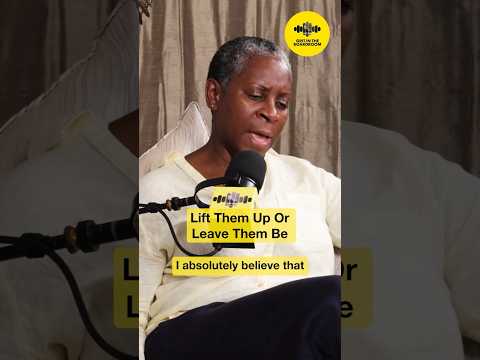
- Um and I absolutely believe that if I cannot lift someone up, then I should leave
- them exactly where I found them. Um and I think we've kind of lost track of that. And for me, some of the best
- leaders, the best bosses I have had, are not the ones who micromanage, are not the ones who, you know, are very distant
- and cold. I once worked with an organization where um the director every morning he came
- through that door and he had to come in on the floor, the open floor, to walk around to his office.
- He never spoke to anyone. Never made eye contact, nothing. And you know, and I still remember that. Whereas when I was
- training, um I spent the best part of um being down in reception, talking to the
- receptionist. Uh I'll talk to anyone, me. When I go into a building, um you know,
- because we're all a team. If the cleaner doesn't clean, you know, the room or wherever,
- you don't you don't perform your best. You know, if the if the receptionist doesn't, you know, that's the first face
- of the organization. All of those things. And and yes, okay, I may have a title that sets me apart, but
- ultimately, going back to that core, we're humans. You know, we're human. My mother always says, you know, we all
- bleed the same. It's the same color. Um but for some reason, at times, we have lost sight of that. And one of my
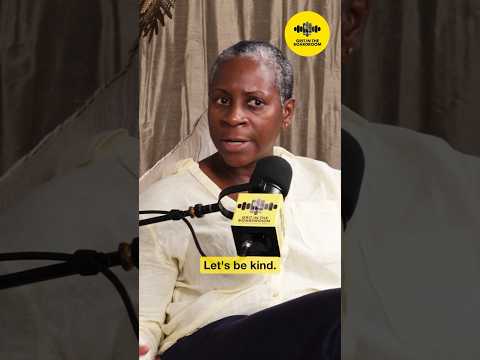
- favorite quotes is, and I can't remember who says it, but you know, in a world where we can be anything, be kind. And I
- tell uh when I go into schools, I tell them that all the time. In this world, with
- all the noise, um all the pressures that are thrown at us as leaders, exactly that. Let's be kind. Let's be
- empathetic. You know, who am I leaving out of the room? Who's not in this room, who should be? Who's not in the
- conversation? Who's not part of the decision? >> And that perfectly brings us back to
- boards and the way that they are structured and made up and the choices that are made on who is in that room and
- who isn't in that room. Do you think the boards can get to a point where they are
- almost just siloed? Their thoughts are very focused on just one type of individual or um not even necessarily in
- looks, but just in thought process. So, thinking about kind of cognitive diversity.
- Have you ever experienced that? Do you think that boards experience that? That's definitely something that I have
- seen, not in every board that I've interacted with, but definitely some. >> Absolutely. I'll give you an example.
- You know, when I left office, obviously I was looking for, you know, a job, a position. Um, and having just
- left an organization of over 400 people, um, you know, a multi-million pound organization and having done it through
- some of the most turbulent times in our nation's history, um, and so forth, to be then told that, um, you know,
- well, you've never sat on a board, you know, a FTSE, whatever it was at the time, uh, you know, board, and so, you
- know, you're unlikely to get onto one. And that has been something, because when you look at some of these, you
- know, boards and and some of the the rollback on diversity on some of these boards.
- And and it really bothers me that if we keep recruiting from the You see the same individuals popping up in the same
- places all the time, and you just think, "Weren't you over there a minute ago? You were chairing that, weren't you? And
- now you're over here." We're locking out talent. Um, and, you know, people cease to put themselves
- forward because, and I've had that, you know, where I think, "Well, what's the point?" You know, you're either too
- polished or you've never sat on a FTSE, whatever board, or, you know, they're not looking. They're looking at,
- um, individuals who have who have all of that, but not willing to give others a chance
- to acquire those skills and expertise. And so, as I say, the question for me is, who's in the room? Who's not in the
- room? Who should be sat at the table? Do I really have to bring my own chair? You know, um,
- I think it was Shirley Chisholm who said that. I'll bring my own camping chair, but I shouldn't need to. And what is the
- story we're telling to those coming behind us as to who can get ahead, who can sit on
- our boards, in our boardrooms. Some of the most important, defining decisions are being made about us as individuals,
- about us as a nation and society and so forth. But yet, it doesn't replicate our
- society. It doesn't replicate our society and therefore those blind spots, they keep coming up and up again and you
- think, "We're here again." When actually, if we stop recruiting in our own likeness,
- from our own networks, um and we're a bit bolder, braver, um and, you know, a bit more innovative,
- I believe that we'd be a a richer, and not just in the monetary sense, but you know, a more richer,
- um innovative society. >> What do you think is one of the biggest myths that boards
- tell themselves about meritocracy? >> Dare I say it, it's not just akin to boards. So,
- >> [laughter] >> so one of the things I talk lots about is is exactly that. Is that, you know,
- not having an issue with merit, although I do. I don't have an issue with merit if it's
- spread evenly. The difficulty is is that those who talk about recruiting on merit, they're not doing so equitably.
- >> Yep. >> You know, there's all these different categories, levers, and all sorts that
- most of us don't even know exist because, you know, had we gone to a particular school, a particular
- university, then that would set us up very nicely to walk into a particular boardroom, a particular position, and so
- forth. But the majority of us, that was not open to us to do that. Um and nor should we penalize people who
- choose to highlight those particular issues. >> And you've spent your career defending public trust.
- In your experience, do organizations lose trust because they break the law or because they slowly abandon their own
- values or maybe both? >> Absolutely both. Absolutely. There are so many examples of exactly that.
- And I think the other thing is is that, you know, organizations talk lots about values.
- Uh I had a paper come across my desk the other day where they were talking I think it was a job description or
- something about the organization's values. And I said, "Well, what are they?" When I went into a school last week, it
- was very clear that as to what one of the the values were. And, you know, when I asked the children, they were very
- clear as to what their values are. But, you go into some organizations and you ask some of the senior, you know,
- leadership team, "What's your values?" You know, they're kind of looking at you, "Do you mean our mission statement
- or or our vision statement or whatever it is?" And I used to be like, "Oh, that will do."
- But, >> [laughter] >> you know, um so they're not clear on, you know, uh what that is. Um
- so there is clarity that's needed. >> And final question for you. If you had 5 minutes with every UK board, listed,
- unlisted, private, charity, not-for-profit, what would you tell them that they underestimate about trust?
- >> It would take me a lot longer than 5 minutes. Actually, it'd probably take me
- less because I think the fact that, you know, they take it for granted at times. It's
- not valued. It's, you know, it's probably not even considered because at times we don't, going back to what I was
- saying, we don't trust that we've got. How many times do we ask ourselves, "Who's in the room who shouldn't be in
- the room?" You you "Who's at the table who's not at the table. When decisions are being taken,
- are we thinking about the unintended consequences of those decisions and who they might affect and how they might
- affect individuals? Or are we just busy being self-serving? We're on the board, we know better, and
- so, you know, this is the right decision um as far as we're concerned, and that will do. Job done um and then they move
- on to their next board meeting. >> And how do they build that trust? >> How do they build that trust? Well, I
- think you have to engage people. So, communication's a big thing. Throughout my career, when I've had difficult
- decisions to make, it's about telling a story. What is the narrative? Tell that story. People are more willing, inclined
- to to to follow you, to go along with you if they understand and can see the journey. But, if they don't understand
- it or you cannot articulate that story properly or clearly, people just, you know, they lose interest, they lose
- trust. >> Thank you, Stephanie. Thank you for being on the show. >> Thank you. >> Erica again. I'm so excited to share my
- final thoughts on today's conversation in just a moment. But, before that, a very quick reminder about Beyond
- Governance. If anything in today's conversation has got you thinking about your own organization's approach to
- governance, risk, or board effectiveness, Beyond Governance is here to help. Find out more at
- beyondgovernance.com or grab the link from the description. >> I really enjoyed the conversation with
- Stephanie today. It was incredibly honest, and a number of interesting discussions ensued. The key things for
- me were around the importance of speaking out. It's always important to speak truth to
- power and to be honest. She also said that if you can't lift someone up, then you should leave them exactly where they
- are. I think that that is so important for all people, humanity, to understand. And also, in a world where you can be
- anything, you should be kind. I think leadership is definitely in different views on whether it's
- important to be empathetic, but Stephanie definitely had a very strong view that they should be. And I think in
- this modern age of leadership, it's something that everybody should start to consider.
- >> [music]
Brief Summary
Dr. I. Stephanie Boyce discusses leadership, integrity, and empathy during crises, emphasizing the impact of COVID-19 on the legal profession.
Key points
- The Importance of Integrity. Boyce emphasizes the critical nature of integrity in leadership and the legal profession.
- Leading Through Crisis. Dr. I. Stephanie Boyce discusses the challenges of leading the Law Society during COVID-19.
- Facing Public Criticism. Boyce reflects on defending the independence of the legal profession amidst public scrutiny.
- The Importance of Honesty. Being honest can build trust, even when the answer is 'I don't know.'
- Trust in Institutions. Distrust is overwhelming us, and we must decide the type of society we want to be.
- Managing Public Perception. Leaders face criticism from faceless individuals online, impacting their reputation.
Episode highlights
- Leading Through CrisisDr. I. Stephanie Boyce discusses the challenges of leading the Law Society during COVID-19.“The pandemic did in 48 hours what perhaps would have taken 10 years.”0:18Jul 15, 2026
- Facing Public CriticismBoyce reflects on defending the independence of the legal profession amidst public scrutiny.“The impact of staying silent is a disservice to those you lead.”15:31Jul 15, 2026
- The Importance of HonestyBeing honest can build trust, even when the answer is 'I don't know.'“Sometimes being honest and just saying, 'I don't know.' goes a long way.”23:19Jul 15, 2026
- Trust in InstitutionsDistrust is overwhelming us, and we must decide the type of society we want to be.“We need to get back that trust in institutions, bodies, individuals.”25:09Jul 15, 2026
- Managing Public PerceptionLeaders face criticism from faceless individuals online, impacting their reputation.“How do you deal with that?”29:31Jul 15, 2026
- Feedback and GrowthLeaders must balance listening to feedback while maintaining their own judgment.“How am I going to grow as a leader if I'm not prepared to listen?”33:12Jul 15, 2026
- The Role of LawyersLawyers often face the stigma of being obstructive, yet they have a duty to advise.“Lawyers are there to advise, not obstruct.”39:55Jul 15, 2026
- Resilience in LeadershipThe journey to leadership is often filled with challenges. 'I would have continued, fifth, sixth, seventh.'43:00Jul 15, 2026