| Grit in the Boardroom
Ask about Grit in the Boardroom
Episode Description
Recorded in New Zealand at the IoD Leadership Conference in Wellington, this episode is another in Grit in the Boardroom's New Zealand series, part of the show's international run of executive interviews with the country's most respected business leaders.
In this director dialogue, Erika Eliasson-Norris sits down with Tony Carter: Chair of Datacom and MyFoodBag, a director of The Warehouse Group, and former CEO of Foodstuffs New Zealand, who has also chaired Air New Zealand and Fisher and Paykel Healthcare. Tony's career offers rare C-suite insights and genuine chair perspectives on boardroom decisions, leadership decisions, and corporate governance, shaped by decades moving between the executive table and the board table across retail, aviation, healthcare, and technology.
Together they explore authority versus influence, and why the worst words a leader can hear in the boardroom are "you're wrong." Tony shares governance lessons on spotting integrity red flags early, why the closeness between a CEO and a chair can quietly turn a board into passengers, and why moving beyond box-ticking risk management toward genuine "show me, don't tell me" scrutiny is critical to strategic decision-making and high-stakes strategy. Drawing on his years running Foodstuffs' franchise network and management case studies spanning private equity ownership and competing shareholder interests, he talks candidly about company culture, cultural fit in board appointments, and how leaders should think about company culture change as AI reshapes entire industries, while insisting "behaviour shouldn't change, value shouldn't change." He also reflects on business resilience and growth under pressure, from Air New Zealand's tailwind years before the airline was hit by pandemic lockdowns just months after he left, to Fisher and Paykel Healthcare's decades-long R&D discipline, and what separates real board effectiveness from a rubber stamp.
It's an episode full of hard-won governance lessons from one of New Zealand's most experienced chairs.
What you'll find in this episode:
· Why integrity red flags are the one thing Tony says he now weighs above all else in a leader
· How influence beats authority every time in the boardroom
· Why a CEO and chair who are too close can turn a board into passengers
· What the Australian banking Royal Commission's "show me, don't tell me" principle means for board scrutiny
· Why complacency is hardest to spot in the good years, not the bad ones
· How cultural fit — not just skills — decides whether a new director actually works
· Why Tony believes behaviour and values shouldn't change, even as AI forces everything else to
About the guest Tony Carter is one of New Zealand's most experienced company directors. He is Chair of Datacom and My Food Bag and a Director of The Warehouse Group. A retailer by background, he was CEO of Foodstuffs New Zealand before building a governance career that includes chairing Air New Zealand and Fisher & Paykel Healthcare, now New Zealand's most valuable company. Tony is known for his emphasis on transparency, listening and constructive challenge, and for a governance style built on supporting management rather than second-guessing it.
About Grit in the Boardroom Grit in the Boardroom is a bi-weekly podcast where Erika Eliasson-Norris sits down with the best in business for executive interviews. She and her guests explore corporate governance beyond the sealed doors of the C-suite.
About Erika Eliasson-Norris As Governance Assessor for the Post Office Horizon IT Inquiry, the largest public inquiry in UK history, Erika Eliasson-Norris is helping shape accountability, governance reform, and corporate oversight across the UK.
Read the full transcriptHide the full transcript
- When someone displays signs that their integrity is not what it should be, that's a an absolute red flag. Behavior
- shouldn't change. Value shouldn't change. The AI wave scares me. I have seen that in the past
- where the CEO and the chair are too close and essentially the board there's passengers.
- My guest today has spent decades at the top of New Zealand business, leading some of the country's biggest
- organizations and sitting around some of the most important board tables. Tony Carter is the chair of Dataccom and My
- Food Bag, a director of the warehouse group and former CEO of Food Stuffs New Zealand. He's also chaired Air New
- Zealand and Fisher and Pel Healthcare. It was this and their incredible long-term outlook that Tony says set
- them apart. So, how do you set your boardroom apart? Let's find out. >> Yeah, I was fortunate. I I came from
- Food Stuffs, which is a franchised organization. Um, so the individual store owners are autonomous within their
- store. And I think one thing I learned was that very quickly that you don't try and tell them how to run their business.
- And that's helped me in my governance career because I haven't tried to micromanage management. um which I think
- is a fault that some CEOs who move into governments do. They try and do the CEO's job for them. The other thing that
- I learned at Food Stuffs very early on um is that your store owners who are your directors
- know much more about the business probably than you do. [laughter] >> Yeah. >> And if you try and and and be a bit
- economical with the truth, they'll call you out straight away cuz they get it from the truck driver who's doing a
- delivery. And so you you learn to be very transparent. Um which I think you know helped me also my governance is you
- know when people aren't being transparent. >> Do you think it made you a different
- kind of leader? >> Yeah I do. Yeah. Yeah. I I think it did it. Um certainly you know where the
- boundaries are in the wrong the various roles and I you know one of my pet hates
- is boards trying to get too involved in the management of the business and not staying in a helicopter and I think it
- certainly helped me do that. >> This podcast is brought to you by Beyond Governance a multi-awwardwinning
- full-ervice governance consultancy. At Beyond Governance, we work with boards, executives, and organizations who want
- to get governance right, not just on paper, but in practice. Whether that's navigating risk, strengthening board
- effectiveness, or building the kind of resilience that holds up when it really matters. That's what we do. If you shape
- strategy, oversee risk, and influence company value at the highest level, head to beyondgovernance.com or click the
- link in the episode description to learn more about how we can work together. Now, let's get back to the show. What do
- you think you've learned about the difference between authority and influence? >> I remember a person at first telling me
- um we have the power of persuasion. [laughter] I think it's a great line and I think
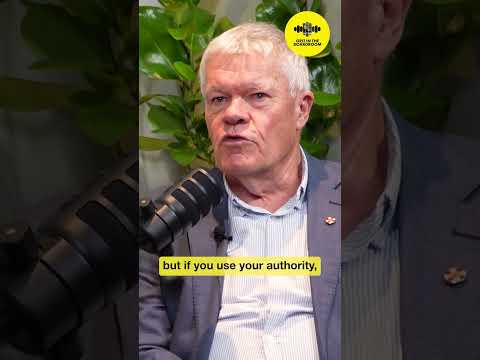
- ultimately boards do have authority but if you use your authority you're not being successful because you're asking
- management to do stuff they don't want to do. um influence is much much more important which you align with them and
- then you'll get the outcomes you're wanting >> and how do you build that >> mutual respect so I think one of the
- skills of a good director is being good listener um and understand what you're being told and perhaps what you're not
- being told um but I think it's it's getting the respect of management that you're not there to catch them out that
- you're there to support them and help them be better at their jobs >> and how do you manage or tread that very
- fine line between persuasion and manipulation. >> Yeah. Um I'm not quite sure what
- manipulation means. Um you know, I think as a director, you just put your view. You ask the right questions. I think
- language is incredibly important as to how you phrase your questions. Um the worst words you can ever hear in a
- boardroom are you're wrong. [laughter] Um you know, I think it's more I have a different view. um is a much more
- positive way of phrasing a question. So I think language is really important. Um
- and if it becomes an adversarial type relationship, then you're in trouble. >> Yeah. And during your years chairing Air
- New Zealand, the airline delivered some exceptional results. uh sustained success obviously creates a very
- interesting leadership problem because those strong performance metrics they actually make it harder sometimes to
- distinguish great judgment from favorable conditions. How do good leaders stop success becoming
- reassurance that everything is fine? >> Oh, that's a good question. Um because I
- think you know the time I had it in New Zealand, we did have a tailwind. We had um increasing demand. we had a um a fuel
- price that was favorable and obviously in in more recent times I left in September 2019 and 3 months later the
- airline got locked down. [laughter] >> So um I think um you know you've just got to be a wee bit careful that you
- don't get too arrogant and too confident that it's what you're doing because a rising tide will lift all boats.
- >> Yeah. And looking back across your career, what should leaders pay more attention to in the good years precisely
- because it can be harder to see them? >> Complacency. >> Okay. And how do you how do you manage
- that? >> I think you've got to challenge yourself. Um that [clears throat] you know and you can you know in an airline
- context you can compare yourself against other airlines as to whether it's a relative outperformance or it's just an
- absolute outperformance. Um, so I think those sorts of things, but I think just never being satisfied that, you know,
- there's always things you can do better. >> And where do you think you've learned
- that from your own personal experience? >> Um, I'm a retailer by background and I
- think one of the beauties of retail is you know every day whether you're winning or losing because you the daily
- sales report is, you know, is something that that marks your score daily. Um and
- that to me I suppose brings out a competitive streak in people and and in me. Um so I think that that sort of
- marking the score and knowing that is really helpful. >> And have you ever seen success make a
- leadership team less curious? Um and what are the kind of early warning signs of that?
- >> Probably the greatest company I've been involved with is Fisher and Ple Healthcare which you mentioned in the
- intro. Um, that's a company that grew as a division of an appliance business into
- now New Zealand's most valuable company. Um, and they took a 20, 30, 40, 50year view. They spend 10% of their revenue on
- R&D. Um, and they're always looking to be better. Um, and I think that's absolute striving for um, getting better
- every day is what sets them apart. And I suppose that applies not just to the leadership team but everybody that organ
- works within the organization. >> Correct. It's got a very unique culture. Um and you know one of my colleagues
- once said about fish and buckle healthcare you've got to governance with a light touch
- and I think you know that is true that their culture is unique. It works for them. Um and I think you try and and
- harness that culture um rather than challenge it. and you've worked with some very highly regarded chief
- executives and have said that watching people and teams grow has been one of the most memorable parts of your career.
- What what does the best chair CEO relationship give that CEO um that they can't get from anyone else?
- I think constructive challenge so that again it comes down to mutual respect that that you understand your respective
- roles that you um don't try and and tell them how to do a job. Um but they also have to know that you've got their back
- that you know if something goes wrong and things do go wrong you look for the learnings. You're not trying to stab
- them in the back. And I think, you know, as a former chief executive, having a a
- chair who you knew was your greatest supporter um even though he would challenge you um is is is gold. And I
- think that's what I've tried to carry through into my chairmanship as well. >> Did you find that when you were a chief
- executive? >> Oh, absolutely. Yeah. Um I was very fortunate that I had I've had, you know,
- four or five cheers when I was at Food Stuffs. Um and all of them to were just remarkable how they supported me and
- often um you know cooperatives are a bit unusual organizations. They've got very
- different dynamics. Um and quite often in my career I'd go to my chairman and say I'm think we need to do this and he
- would counsel me not so much about what we were doing but how to sell it. Um and he was able to bring a a view
- that if you approach it like that the members will get frustrated and and react but if you approach it like this
- you'll get the same outcome but they'll support it. And I think that was immensely valuable to me was that sort
- of colleial um view that that they would support the the outcome but they give you counsel about how best to present
- it. Obviously that close relationship is is really important. How do you avoid it
- becoming too close? >> That's that that is a good question. I have seen that in the past where um you
- know the CEO and the chair are too close and essentially the board there as passengers. Um I think that very much
- depends on the chair um being able to make sure that that when things get to the board table there is genuine
- discussion not just a rubber stamp. Moving from being a hands-on chief executive to leading from a boardroom
- changes the way that you can exert influence as you've said. You've said um about your food staff's background and
- said that it helps you understand boundaries between individual store owners and the autonomy there. When you
- see a leader making a decision differently from the way you would make it, how do you decide whether to
- challenge, to coach, or simply to just let them get on with it? >> It's so circumstance dependent. You
- know, I think people will do differently things differently to the way you do them. That's fine. They might even do
- them better than the way you would have done them. And you've just got to accept
- that. Um and you know I think one of the interesting things is every company's got their delegated authority matrix and
- you know that clearly sets out what is within management's ambit and what is within the board's ambit. Where it gets
- fuzzy is when it's really goes to reputation. Um and I'll give you an example. I remember reading in the
- Herald, which is a Oak Aland newspaper, um about one of the execs at New Zealand
- being appointed to a board. And I was a bit frustrated cuz I read it and the we had a a reasonably healthy debate with
- the CEO about whether that was something that should have been at least notified
- to the board. Um so it and it wasn't clear in the delegated authority. It was simply a matter of judgment. And I think
- as a CEO, you get good at knowing what the board wants to know and what it doesn't want to know.
- >> Yeah. >> Yeah. >> Hi everyone, your host Erica Norris here. I want to take a quick moment to
- talk about something close to me. Every conversation I have on this podcast comes back to the same thing. The
- pressure of making high stakes decisions with real consequences and doing it with
- integrity. That's exactly why Beyond Governance exists. We partner with leaders and boards who refuse to treat
- governance as a box ticking exercise because the cost of getting it wrong is too high. If that resonates with you, go
- to beyondgovernance.com or click the link in the episode description to explore what we do. Right now, back to
- the show. >> What would you say is one of your I suppose pivot most important moments as
- a chair that you felt you learned most from that experience? The moment you get challenged as a cheer is when your peers
- around the board table challenge what you've done or the approach you've taken. And that's healthy. That really
- is. Um I suppose the biggest learning experiences in my governance career weren't from
- when I was a chair. It was another company which it had issues that the board weren't on top of. Um, and I think
- it it goes back is there were questions that should have been asked that weren't
- asked. Um, and I didn't think to answer. It wasn't that I was afraid to answer those questions. I never thought to ask
- that question. Um, and with the benefit of hindsight, I wish I had because it could have saved a lot of trouble.
- >> What do you think it is that makes people not want to speak or say something? Is it just courage or is
- there other factors? >> In this particular case, it wasn't courage. I mean, I think we were would
- have been quite happy asking I I I'll flesh it out a bit. Um there was a company that was committing to two big
- contracts at the same time and one of the directors asked the question that I was going to ask was, "Do you have the
- resources if we win both of these bids?" Um, and the executive management said yes. What I wish I'd asked is a
- follow-up question is how do you know that? Cuz they didn't. [laughter] >> Yes. >> And I think that's a really important
- question that that's worth asking a lot of times is when you get told something,
- ask them how they know it. Um, and you may be aware in in Australia there was a Royal Commission into the banking and
- one of the sort of a catchphrases that came out of that was show me don't tell me
- >> and I suppose you come at it from a different angle when you're the chief executive. Do you have any experience of
- being in a similar situation of thinking actually if something different had happened you know a different outcome
- would have would have occurred. I can't think any off the top. I what I can say is the issues when I was a chief
- executive that got the most board time were actually not financial matters. They they went down to equity between
- members of the cooperative. Um and I can say almost without exception every time
- they got challenged um a management recommendation got challenged you were really frustrated at
- the time. Um but inevitably the final result was better. [laughter] >> Yeah. >> And and learning that that that
- challenge was actually meant to help a better decision rather than just be a frustration to you is is a is a lesson
- that you have to learn. >> And I guess that's possibly even just a lesson in life generally. Like you learn
- from good experiences, bad experiences. It makes you who you are. >> Yeah. And you learn a lot more from bad
- experiences than you do from good ones. [laughter] >> Yeah. That's true. That's absolutely
- true. Somebody can often tell you how something will feel or what it will be like. It's not quite the same as when
- you've lived it yourself. >> Exactly. Yeah. >> And I guess then it's a matter of
- bringing other people along on the journey or mentoring, teaching them the things that you know.
- >> Yeah. >> Um you have now seen leaders across retail, aviation, healthcare, technology, banking, infrastructure and
- a number of other sectors. um strategies and industries can obviously differ but
- the people are always there. What have you changed your mind about when it comes to spotting leadership potential?
- What qualities do you now value more and what qualities impress you less than perhaps they once did?
- I think the one that impresses you less is when someone's displays signs that their integrity is
- not what it should be. And I have seen that in in leaders and I think that's an absolute red flag. If you're getting
- feared information that you find out later that is not true, then you've got a real issue. So I think that sort of
- transparency and honesty is so important um in in every leader. Um the other one
- I keep coming back to is the ability to listen. Um and you know I think the great leaders that I've been involved
- with are always great listeners and they they understand not only what is being said but what is being meant and the two
- might be different. >> How do you train that skill? >> I don't think you can train it. I think
- you learn it. Um [cough] [clears throat] >> I think some people are maybe just naturally better at it than others.
- >> Yeah. And I I think it's one of those things you get through. I mean the biggest um impediment to that is ego. If
- you've got an ego >> Yeah. >> you're not being a great listener. >> Yes. Oh, that's absolutely true. Yeah.
- How do you kind of work with that when you're going through kind of interview and selection process for somebody on
- the board? Because it's not always obvious. No, it's not obvious. Um, the board appointment process is something
- that, you know, it's been discussed a lot. Um, I found the best process involves not only, you know, the the
- interview part of it. Um, but the critical thing is cultural fit as to whether that person is going to be able
- to make a contribution. And that that could be that they use language that's too challenging that frustrates
- management and the barriers go up or it could be that they're too compliant and and don't ask the difficult questions.
- And the thing that I I think I found the most successful is is having an environment, a social environment where
- the board is able to to interact with that potential director in a non-confrontational way. You're able to
- see what happens when the guards down. [laughter] >> Yeah. >> And how do you facilitate that? Is that
- things like board dinners and site visits and things like that? You know, I I've had one example where um we were
- recruiting for a new director and we put up um the a person um we thought they had the skills, we thought they had the
- experience and we thought they would might be would be a cultural fit. They met management. Management were a bit
- more reserved. They then had a board dinner and the board said to to us the next day, "No, we don't think culturally
- they'll fit with us." Um, and that was good. It was good process. Um, the director concerned was pretty unhappy.
- Um, but I think with the benefit of hindsight, we made the right call. >> And that's actually quite a big decision
- if you get to that final stage, all the effort, the work has been put in, you've
- selected people, you've kind of narrowed narrowed them all down, and you get to that point and somebody makes the call
- of still not right. That I think is that's a proper decision that's made there. Yes, it is. And you know, you're
- probably a bit gutted personally at the time. Um, but you know, again, it comes back the the decision was the right, you
- know, and with the benefit of hindsight, undoubtedly decision was right. >> And there's that kind of analogy of, you
- know, high, slow, fire, fast. So, the reality is you need to make sure that that person is going to fit.
- >> And and with a director appointment, it is a long-term appointment. It's, you
- know, particularly in the listed space, you put someone on and then six months later you tell them to go, it's not a
- great look. Um, so, you know, taking the time to get it right and make sure the cultural fit is right is really
- important. >> How do you think you can assess what your culture is? Because when you're in
- it, sometimes it's difficult to see. I think external facilitated board reviews are important um because they provide a
- very um safe way for people to provide feedback um both to you as the chair um and particularly for management to
- provide feedback to the board um as to what they think's good and what they don't think's good. Um so I I think
- those externally facilitated board reviews um really help that and they also help with an independent view of
- what the skills that are on the board and what should be on the board. Um so that skills sort of matrix type stuff.
- Um having an external view of that I think is really helpful too. >> And you've spoken recently about staying
- true to purpose while technology and AI change rapidly. How does a leader know what must change and also what shouldn't
- change? >> Behavior shouldn't change and value shouldn't change. Um, you know, the the
- AI wave scares me. Um, you know, I'm I'm at the towards the end of my career, but the
- pace of change and the impact of that change is just so unclear. It is a scary time and it's a scary time for society.
- Um, and you know, obviously companies will have to adapt. Um, and if you don't adapt, you'll be out of business before
- you know it. So, it's it's it's not as though that the choice to not not engage with it's not a choice. Um so you got to
- and then it comes down if if people you know are replaced by automation which is
- inevitable. It comes down to values as to how you treat people who will no longer have a role within the
- organization. >> Onto my final question. So you've chaired and led organizations with very
- different ownership structures. We've spoken about some of them today and some very different cultures. What have those
- experiences taught you about building trust when the people around the table have genuinely different interests? You
- know, I think at the end of the day, it's the ability comes back listen to what they're saying. Um recognize that
- there's potential conflicts. Um that um you know, people have different aspirations. you know, um I'm involved
- with a company that's got a private equity um shareholder um not a majority shareholder and obviously their time
- frame for value is different to the founders's time frame for value and and just being respectful. They've got
- different perspectives. They're coming from different places. being transparent and open about that and acknowledging it
- and then finding a a way through it that that everyone perhaps is not um happy with but can live with.
- >> Erica again I'm so excited to share my final thoughts on today's conversation
- in just a moment but before that a very quick reminder about Beyond Governance. If anything in today's conversation has
- got you thinking about your own organization's approach to governance risk or board effectiveness beyond
- governance is here to help. Find out more at beyondgovernance.com or grab the link from the description. I really
- enjoyed my conversation with Tony today. It was all about language. [music] He said that it was one of the most
- important things to consider in the boardroom. As directors, we obviously have a lot of authority, but as Tony
- [music] says, when you use that authority, you're not being successful. Influence is much more important than
- authority. [music] So, how do you build that influence? You build it through mutual respect, being a good listener,
- and understanding what you're being told. You also need to make sure that you let your team know that you're there
- for them and not there to catch them out. And to finish [music] up, don't forget the worst words that you can ever
- hear in the boardroom, which are, "You're wrong.
Brief Summary
Tony Carter discusses leadership, influence, integrity, and boardroom dynamics based on his extensive experience in New Zealand business.
Key points
- The Importance of Integrity. Integrity is crucial in leadership; signs of its absence are major red flags.
- Learning from Experience. Bad experiences often teach more valuable lessons than good ones.
- The Importance of Cultural Fit. Assessing cultural fit is crucial for organizational success. External reviews can provide valuable insights.
- Navigating Change in Leadership. Leaders must discern what aspects of their organization should remain unchanged amidst rapid technological advancements.
- Building Trust in Diverse Interests. Trust can be built by recognizing different perspectives and finding common ground in conflicts.
Episode highlights
- Learning from ExperienceBad experiences often teach more valuable lessons than good ones.“You learn a lot more from bad experiences than you do from good ones.”15:56Oct 6, 2026
- The Importance of Cultural FitAssessing cultural fit is crucial for organizational success. External reviews can provide valuable insights.“Cultural fit is really important.”20:46Oct 6, 2026
- Navigating Change in LeadershipLeaders must discern what aspects of their organization should remain unchanged amidst rapid technological advancements.“Behavior shouldn't change and value shouldn't change.”21:52Oct 6, 2026
- Building Trust in Diverse InterestsTrust can be built by recognizing different perspectives and finding common ground in conflicts.“It's the ability to listen to what they're saying.”23:05Oct 6, 2026